
You wanted those headphones for weeks. You read reviews, watched the price and pictured how much better your commute would be. They arrive, you love them for a few days, and by the next week they are just headphones. Your eyes are already on the next thing.
This is not a personal failing, and it is not random. In 3 studies, people who put money and possessions first felt their best about a product while they were still wanting it, and those good feelings fell after they bought it [1]. People low in materialism did not show this rise and fall [1]. Across 259 samples, putting wealth, image and status first went with lower wellbeing [2]. Contentment, a settled sense of "enough" that frees you to enjoy what you have and give more away, is not laziness and not giving up on goals. It is a set of small habits, and you can practise them.
Here's What's Going On
Psychologists call the habit of putting money, possessions, image and status at the centre of life materialism [2]. The largest review so far, by Helga Dittmar, Tim Kasser and colleagues, pooled 753 effect sizes from 259 independent samples [2]. Materialist values and beliefs went with lower wellbeing (r = -.19) [2]. The link was weakest for life satisfaction and bad moods (r = -.13 to -.15) and strongest for risky health and buying behaviour and for negative views of yourself (r = -.28 to -.44) [2]. The review also found that the link was partly explained by poor "need satisfaction" [2]: people who chase things tend to feel less free, less close to others and less capable.
Step 1: Write Your "Enough" Lines and Keep Them Where You Shop

WHY THIS MATTERS
"More" never tells you when to stop, so you need your own line. Materialism is most tightly linked to risky buying and harsh views of yourself [2], which are exactly the moments when a purchase promises to fix how you feel. Because people who shift their goals away from materialism gain wellbeing over time [3], a written line is a way to make that shift concrete and visible at the moment you spend.
- Take 15 minutes and a note on your phone. Write one line for each of 5 areas, each starting with "Enough for me is...":
- Money: "Enough money: bills paid, a small monthly saving, and a little to give."
- Stuff: "Enough clothes: what fits in my wardrobe with the door closed."
- Work: "Enough work: home by 6 on 4 days a week."
- Food: "Enough food: 1 takeaway a week."
- Screens: "Enough screens: 1 hour of social media a day."
- Make every line checkable. A line you can answer yes or no to ("fits in my wardrobe") works; a vague one ("not too much") does not.
- Add one line on what your "enough" frees up: "What I gain: Sunday mornings with my kids, a monthly gift to a cause I care about, more sleep."
- Put the lines where you spend. Save them as your phone lock screen or a pinned note, tuck a copy in your wallet or card holder, and stick one beside the laptop you shop on.
- Before any purchase that is not a weekly routine, read the matching line and ask out loud: "Do I need this, or do I just want it right now?" If it breaks a line, it goes to your want list (Step 3).
- Reread the lines once a month. Change a line only when your life or values change, never because of an ad or a sale.
Within 2 weeks you have 5 written "enough" lines and one "what I gain" line, and you can check any purchase against them in about 10 seconds.
Step 2: Turn Weekly Thanks Toward What You Already Have

WHY THIS MATTERS
Wanting points your attention at what is missing; thanks points it back at what is already yours, which is the heart of "enough". Gratitude also works against materialism directly. In over 900 teenagers, those with a grateful outlook were less materialistic, and in an experiment, keeping a gratitude journal lowered materialism [10]. Teens who kept the journal gave 60% more of their earnings to charity than the control group [10], so thanks fed straight into the spending habit in Step 4.
The wider evidence is modest but steady. A preregistered review of 145 papers and 24,804 people in 28 countries found small increases in wellbeing from gratitude practices (g = 0.19), with results that varied between countries [4]. In the classic trial by Robert Emmons and Michael McCullough, one group kept weekly lists of things they were grateful for, and the gratitude groups did better than hassle or neutral groups on several, though not all, measures, most clearly in positive mood [5]. The Greater Good Science Center reports that the weekly group wrote for 10 weeks [6]. Expect a lighter mood and a calmer relationship with your wants, not a cure.
- Pick one fixed time a week, such as Sunday evening, and put it in your calendar next to your monthly "enough" review (Step 1).
- Write 3 to 5 specific thanks from the past week [6], on paper or in your phone, but in writing [6].
- Make at least 2 of them about people: what they did, and why it mattered [6].
- Make one of them about something you already own and use: the coat that kept you warm, the bike that got you to work. This is your counter to the want list.
- Keep going for at least 10 weeks, the length of the weekly trial [5] [6].
- At the end of each month, read your entries next to your want list. Count how many thanks were about things you bought recently. Most weeks the answer is few or none.
After 10 weeks you have about 10 pages and 30 to 50 thanks, most about people, and fewer of your wants feel urgent.
Step 3: Make Every New Want Wait 30 Days, and Use One In, One Out
WHY THIS MATTERS
Desire for a product often peaks before you own it [1]. For people high in materialism, the lift came from expecting the product to transform their lives, and it faded after purchase [1]. A waiting list lets that lift fade while the money is still in your account, so you buy only what you still want once the high is gone.
- Start a "want list" in your phone. Each new non-essential want gets a line: the item, the price and today's date.
- Write it down instead of buying it. No exceptions for sales: a sale is a want with a timer.
- After 30 days, reread the list. Buy an item only if you still want it, can pay in full, and it fits your "enough" lines (Step 1). Delete the rest without guilt.
- Today, unsubscribe from 5 store emails and remove saved cards from 2 shopping apps, so every buy needs a pause.
- Use one in, one out at home. For each new item, give away, sell or recycle one item of the same kind within 7 days: a new shirt means one shirt leaves.
- Keep a running count of what left the list unbought. That number is your evidence that the system works.
Within a month many of your new wants never get bought, and the things in your home stop piling up.
Step 4: Send the Money Your "Enough" Saves to People and Shared Moments

WHY THIS MATTERS
Steps 1 and 3 leave money unspent. This step decides where it goes, so living simply feels rich instead of tight. The core rule is simple: when you do spend beyond your needs, choose other people and shared experiences over more things for yourself. In a high-powered registered replication, 712 students were randomly assigned to buy something for a stranger in need or for themselves, and those who bought for the stranger felt happier in the moment [7]. Merely recalling past giving had no effect in 1,950 adults and a small one in 5,199 [7], so the act counts, not the memory.
The pattern held in survey data from 136 countries, in poor and rich countries alike [11]. In two surveys, people said experiential purchases made them happier than material ones [8], partly because experiences invite fewer comparisons than things [12], which matters for anyone trying to step off the "more" cycle.
- Each month, add up what your want list saved: the price of every item you deleted after 30 days (Step 3).
- Move a set share of that, such as a quarter, to a "give and share" fund. If nothing was saved, use a small fixed amount, such as the price of a coffee each week.
- Once a week, spend from it on someone else: a colleague's coffee, a neighbour's dinner, a cause where you can see the result. Choose someone in need when you can, as the replication tested [7].
- Do it in person when you can, rather than only remembering past kindness [7].
- When a want survives 30 days, ask one more question: "Is there a shared experience I would rather have with this money?" [8] [12]
- Never go into debt to give or to buy experiences. Kind acts that cost nothing, like an hour of help, count too [13].
Within 4 weeks your want list is paying for weekly kindness, you have chosen at least one shared experience over a thing, and you can name which spends made you feel best.
Step 5: Turn Down the Signals That Start New Wants, and Keep One Evening Empty
WHY THIS MATTERS
Most new wants start with a signal: an ad, a sale email, a post of someone else's new kitchen. Every signal that never reaches you is a want that never needs the 30-day list. A meta-analysis of 48 experimental papers with 7,679 people found that seeing better-off others on social media lowered how people felt about themselves (g = -0.24) [9]. Feeling worse about yourself is where the strongest materialism link sits [2].
An empty evening is the other half: time to use and enjoy what you already have. In data from 35,375 Americans and two experiments, too little free time was linked to lower wellbeing through stress, while far more did not keep helping and could even lower wellbeing when it felt unproductive [14]. One protected evening a week sits in the useful middle.
- Today, unfollow or mute 10 accounts, stores or influencers that leave you wanting to buy. Ten is a start; mute more as you notice them.
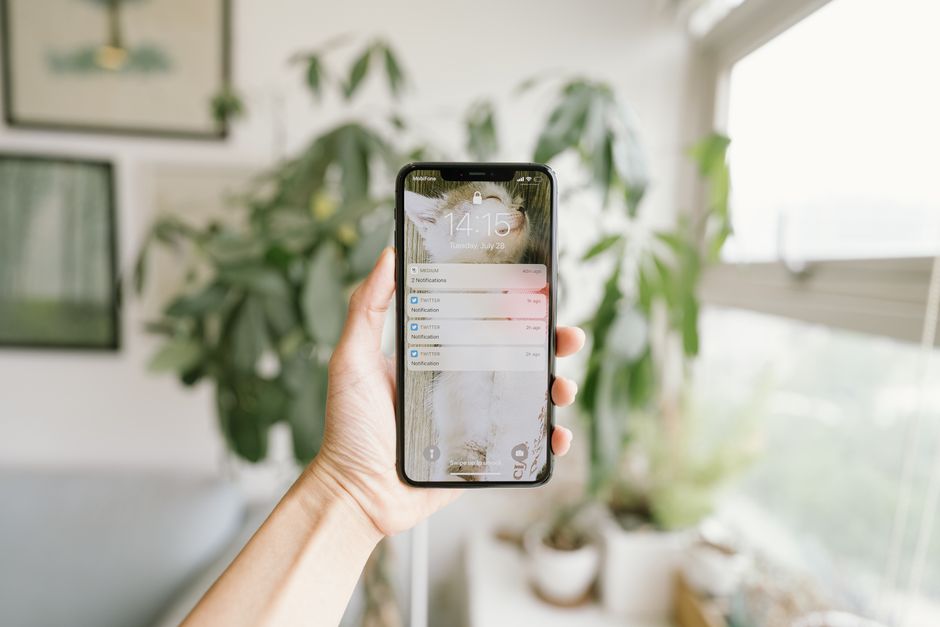
- Turn off shopping, sale and "back in stock" notifications on your phone and in your email.
- Block one evening a week in your calendar with nothing planned, for example every Wednesday from 6 pm. Protect it like an appointment with a friend.
- Keep it loose, with no to-do list. Use something you already own: cook from the cupboard, read a book from your shelf, ride the bike, call someone from your thanks page.
- If the evening drags, add one small useful thing, like cooking for someone, since free time felt better when spent on something productive [14].
- Once a month, add one line to your want list review: "Where did these wants start?" Mute that source.
Within 3 weeks fewer wants reach your list, and you have at least one unhurried evening a week spent with what and who you already have.
Track It
For the next 7 days, keep one tally in your phone: each day, write the number of non-essential purchases you made and the number of wants you sent to your 30-day list instead. Unlisted buys count double. On day 7, add them up and rate your "enough" from 1 to 10, where 8 means "I feel I have enough, and I enjoy it." Check again on day 21 and then monthly: aim for fewer purchases than in week 1, more wants on the list than in the basket, and an "enough" score at least 2 points higher than your first.
Skill Check
| Skill | Starting | Solid | Strong |
|---|---|---|---|
| "Enough" score (weekly, 1-10) | Your first score | 2 points better than your first | That level or better, steady for 3 months |
| Gratitude (weeks in the last month with 3-5 specific thanks, 2+ about people) | 0 to 1 | 3 | 4, every month for 3 months |
| Extra buying (non-essential buys per week; unlisted buys count double) | Your first week's count | Half your first count | That lower level, steady for 3 months |
| Spending on others and experiences (times in the last month) | 0 to 1 | 4 (about once a week) | 4 or more, every month for 3 months |
| Room to breathe (free evenings or half-days last week) | 0 | 1 | 2 or more |
| Feeds (accounts that make you want to buy or compare) | Your first count | 10 fewer | None you notice, checked monthly |
Myths
- "Contentment means giving up on goals." Not true. The research links wellbeing to the relative weight of materialistic goals compared with other goals, not to having no goals [3]. You can work hard for a home, a family or a cause.
- "I'll be happy when I get it." For high-materialism shoppers, good feelings peaked while wanting and fell after buying [1].
- "Gratitude only works if you do it daily." Weekly lists for 10 weeks lifted wellbeing in a classic trial [5] [6], and the large review found small gains overall [4].
FAQ
Is wanting things bad? No. Wanting is normal. The problem is when money and possessions sit at the centre of life, which goes with lower wellbeing [2]. The want list lets you buy what still matters after 30 days.
How long before I feel different? The weekly gratitude trial ran for 10 weeks [5], and kindness effects showed over 6 weeks [13]. Give each skill at least a month.
I'm on a very tight budget. Does this apply? Yes. Your "enough" lines can describe needs only. Kind acts that cost nothing count [13], and the want list protects money you cannot spare.
Doctor's Note
Talk to a doctor or therapist if discontent comes with low mood on most days for 2 weeks or more, if buying feels out of control or leads to debt, or if letting go of belongings feels impossible or rooms become hard to use, which can be hoarding disorder [15]. A doctor can refer you for support [15]. If you feel unsafe, find a free line at findahelpline.com or call your local emergency number.
What Next
- For why "more" never feels like enough, read Greed and Always Wanting More: Why Enough Never Feels Like Enough.
- For more ways to buy less and use what you have, read Buy Less and Enjoy Enough: Wait, Use What You Have.
- For buying time and deeper happy-spending methods, read Spend Money for Happiness: Experiences, Buying Time and Giving to Others.
- For gratitude in depth, read Gratitude That Actually Works: Once a Week, Specific and Fresh.
- For status, comparison and income, read Step Off the Status Treadmill: Money, Status and Keeping Up with Others.
- To clear a room or a whole home, read A Home Should Hold Your Life, Not Bury It: How to Declutter.


