

You wanted those headphones for weeks. You read reviews, watched the price and pictured how much better your commute would be. They arrive, you love them for a few days, and by the next week they are just headphones. Your eyes are already on the next thing.
This is not a personal failing, and it is not random. In 3 studies, people who put money and possessions first felt their best about a product while they were still wanting it, and those good feelings fell after they bought it [1]. People low in materialism did not show this rise and fall [1]. Across 259 samples, putting wealth, image and status first went with lower wellbeing [2]. Contentment, a settled sense of "enough" that frees you to enjoy what you have and give more away, is not laziness and not giving up on goals. It is a set of small habits, and you can practise them.
Here's What's Going On
Psychologists call the habit of putting money, possessions, image and status at the centre of life materialism [2]. The largest review so far, by Helga Dittmar, Tim Kasser and colleagues, pooled 753 effect sizes from 259 independent samples [2]. Materialist values and beliefs went with lower wellbeing (r = -.19) [2]. The link was weakest for life satisfaction and bad moods (r = -.13 to -.15) and strongest for risky health and buying behaviour and for negative views of yourself (r = -.28 to -.44) [2]. The review also found that the link was partly explained by poor "need satisfaction" [2]: people who chase things tend to feel less free, less close to others and less capable.
These are links, not proof of cause. Stronger evidence comes from studies that follow people over time. Across 3 long-term studies of US young adults and Icelandic adults, over 12 years, 2 years and 6 months, people's wellbeing improved as they placed less importance on materialistic goals, and fell as they placed more [3]. In a fourth study, highly materialistic US teenagers given a program that lowered their materialism gained self-esteem over the next several months compared with a control group [3]. Values can move, and wellbeing tends to move with them.
Why does the next purchase never feel like enough? Marsha Richins followed shoppers before and after buying [1]. People high in materialism expected the product to change their lives in meaningful ways, felt a lift while they wanted it, and felt that lift drop after they owned it [1]. For them, wanting and anticipating seemed more pleasant than having [1]. That is the engine behind every step below: each skill either draws a line for wanting, puts attention back on what you have, sends money where it lasts longer, or turns down the signals that start new wants.
Step 1: Write Your "Enough" Lines and Keep Them Where You Shop

WHY THIS MATTERS
"More" never tells you when to stop, so you need your own line. Materialism is most tightly linked to risky buying and harsh views of yourself [2], which are exactly the moments when a purchase promises to fix how you feel. Because people who shift their goals away from materialism gain wellbeing over time [3], a written line is a way to make that shift concrete and visible at the moment you spend.
How it works
A purchase decision is fast. An "enough" line gives you a ready answer that you wrote when you were calm, so the decision is no longer "do I want this?" (you always will) but "does this fit what I already decided is enough?". The line also names what your "enough" frees up, so saying no feels like choosing something, not losing something. In the long-term studies, wellbeing changed with the relative weight people gave to materialistic goals compared with other goals [3]; your "what I gain" line is where those other goals go.
- Take 15 minutes and a note on your phone. Write one line for each of 5 areas, each starting with "Enough for me is...":
- Money: "Enough money: bills paid, a small monthly saving, and a little to give."
- Stuff: "Enough clothes: what fits in my wardrobe with the door closed."
- Work: "Enough work: home by 6 on 4 days a week."
- Food: "Enough food: 1 takeaway a week."
- Screens: "Enough screens: 1 hour of social media a day."
- Make every line checkable. A line you can answer yes or no to ("fits in my wardrobe") works; a vague one ("not too much") does not.
- Add one line on what your "enough" frees up: "What I gain: Sunday mornings with my kids, a monthly gift to a cause I care about, more sleep."
- Put the lines where you spend. Save them as your phone lock screen or a pinned note, tuck a copy in your wallet or card holder, and stick one beside the laptop you shop on.
- Before any purchase that is not a weekly routine, read the matching line and ask out loud: "Do I need this, or do I just want it right now?" If it breaks a line, it goes to your want list (Step 3).
- Reread the lines once a month. Change a line only when your life or values change, never because of an ad or a sale.
When it does not work
- You never look at the lines. Move them to the exact place where money leaves: the lock screen, the card itself, the shopping app's home screen folder.
- Every purchase "fits". The line is too loose. Rewrite it with a number or a physical limit (one shelf, one takeaway, one hour).
- You feel deprived. Read the "what I gain" line first. If it is empty or abstract, make it a real person, a real day or a real cause.
- You break a line after a bad day. That is the pattern the research points to: risky buying is tied to negative views of yourself [2]. Treat the slip as information, not failure, and add the want to the 30-day list next time.
Special groups
- Low income or debt. "Enough" is not a call to give up needs. Your money line may be "rent, food, bills and one small saving", and that is a full, honest line.
- Couples and families. Write your own lines first, then compare. Agree on shared lines (home, food) and keep personal ones personal.
- Teenagers. Gratitude practice has lowered teen materialism in a trial [10], so pair a teen's "enough" lines with Step 2 rather than with rules from a parent.
A worked example
Maya earns an average salary and shops online most evenings. Her first stuff line was "not too many clothes", and every buy seemed to fit it. She rewrote it as "Enough clothes: one rail and two drawers, and I can see every item." The next week, a jacket in a sale broke the line, so it went to her want list instead of the basket. Her "what I gain" line, "a weekend away with my sister each spring", turned the no into a yes to something she valued more. A month later she had deleted the jacket and most other items from the list without noticing the loss.
How to check your lines are working
Each month, look at the purchases you made outside your routine. For each one, mark whether you read the matching line first. If fewer than half were checked, the lines are in the wrong place: move them closer to where you pay. If most were checked but you still broke the lines, they may be set lower than your real needs, so adjust one, honestly, and test it for another month.
Within 2 weeks you have 5 written "enough" lines and one "what I gain" line, and you can check any purchase against them in about 10 seconds.
Step 2: Turn Weekly Thanks Toward What You Already Have

WHY THIS MATTERS
Wanting points your attention at what is missing; thanks points it back at what is already yours, which is the heart of "enough". Gratitude also works against materialism directly. In over 900 teenagers, those with a grateful outlook were less materialistic, and in an experiment, keeping a gratitude journal lowered materialism [10]. Teens who kept the journal gave 60% more of their earnings to charity than the control group [10], so thanks fed straight into the spending habit in Step 4.
The wider evidence is modest but steady. A preregistered review of 145 papers and 24,804 people in 28 countries found small increases in wellbeing from gratitude practices (g = 0.19), with results that varied between countries [4]. In the classic trial by Robert Emmons and Michael McCullough, one group kept weekly lists of things they were grateful for, and the gratitude groups did better than hassle or neutral groups on several, though not all, measures, most clearly in positive mood [5]. The Greater Good Science Center reports that the weekly group wrote for 10 weeks [6]. Expect a lighter mood and a calmer relationship with your wants, not a cure.
How it works for contentment
A purchase promises to make life better [1]. A weekly page of thanks is a written record that life already holds good things, most of them people and moments, not products. The Greater Good guide asks for a written record rather than thanks in your head, and says people matter more than things [6]. For contentment, that second point is the key: every week, your page quietly shows that the best parts of your week were not bought.
- Pick one fixed time a week, such as Sunday evening, and put it in your calendar next to your monthly "enough" review (Step 1).
- Write 3 to 5 specific thanks from the past week [6], on paper or in your phone, but in writing [6].
- Make at least 2 of them about people: what they did, and why it mattered [6].
- Make one of them about something you already own and use: the coat that kept you warm, the bike that got you to work. This is your counter to the want list.
- Keep going for at least 10 weeks, the length of the weekly trial [5] [6].
- At the end of each month, read your entries next to your want list. Count how many thanks were about things you bought recently. Most weeks the answer is few or none.
When it does not work
- You skip weeks. Tie the page to something you already do weekly, like your Sunday "enough" check, and keep it to 3 items.
- You feel nothing. The average effect is small [4], and it shows mostly in mood [5]. Give it the full 10 weeks.
- Your thanks are all about things. Swap one item each week for a person [6].
Special groups
- Teenagers. This is the best first skill for a young person who always wants more, because a gratitude journal lowered teen materialism and raised giving [10].
- People with long-term illness. One of the original trials included adults with neuromuscular disease, and gratitude still helped some outcomes [5].
For deeper gratitude methods, see Go further.
After 10 weeks you have about 10 pages and 30 to 50 thanks, most about people, and fewer of your wants feel urgent.
Step 3: Make Every New Want Wait 30 Days, and Use One In, One Out
WHY THIS MATTERS
Desire for a product often peaks before you own it [1]. For people high in materialism, the lift came from expecting the product to transform their lives, and it faded after purchase [1]. A waiting list lets that lift fade while the money is still in your account, so you buy only what you still want once the high is gone.
How it works
The want list separates wanting from buying. You do not have to fight the want; you write it down, which feels like action, and the clock does the rest. One in, one out works on the other end: it turns every new item into a choice about what you already own, so your home stops filling up without a big clear-out.
- Start a "want list" in your phone. Each new non-essential want gets a line: the item, the price and today's date.
- Write it down instead of buying it. No exceptions for sales: a sale is a want with a timer.
- After 30 days, reread the list. Buy an item only if you still want it, can pay in full, and it fits your "enough" lines (Step 1). Delete the rest without guilt.
- Today, unsubscribe from 5 store emails and remove saved cards from 2 shopping apps, so every buy needs a pause.
- Use one in, one out at home. For each new item, give away, sell or recycle one item of the same kind within 7 days: a new shirt means one shirt leaves.
- Keep a running count of what left the list unbought. That number is your evidence that the system works.
When it does not work
- You skip the list "just this once". Count every unlisted buy twice in your weekly tally (see Track It). Make the list as fast as the checkout: a home-screen shortcut to the note.
- You buy on day 31 every time. Ask on day 30 whether you would buy it at full price today. If you still would, buy it calmly: the system worked.
- The list gets huge. That is good news, because most items will be deleted. Review it once a week instead of letting it pile up.
- One in, one out stalls. If you cannot choose what to let go, keep a "maybe" box for 30 days, then donate what you did not miss.
- Letting go feels very hard. If clutter makes rooms hard to use or letting go causes real distress, that can be a mental health condition called hoarding disorder [11]. Speak to a doctor, who can refer you for support [11].
Special groups
- Real needs. The list is for wants. Replace a broken essential (shoes for work, a school coat) when you need to.
- Shared homes. Apply one in, one out to your own things. For shared items, agree on it together.
- Gifts. Gifts count as "in". Let one similar item go, or pass on the gift if it does not fit your life.
How to run the 30-day review
Set a repeating reminder for the same day each week, and in that session look only at items that are 30 days old or more. For each one, answer three questions in order, and stop at the first "no": Do I still want it? Can I pay in full today without touching savings? Does it fit my "enough" lines? An item that passes all three is a planned purchase, so buy it without guilt. An item that fails any one is deleted, and its price goes into the "saved" total you use in Step 4. Over a few months, the list becomes a record of how much of your wanting faded on its own, which fits what the research shows: for people high in materialism, the lift came while wanting, not after having [1].
A worked example
Sam added 14 items to his list in his first month: a watch, two games, trainers, a smart speaker and a stack of smaller things. At each weekly review, most items failed the first question. After 30 days, he bought 2, the trainers he needed for running and one game, and deleted 12. The trainers came with one in, one out: his old pair went to a donation bin the same week.
Within a month many of your new wants never get bought, and the things in your home stop piling up.
Step 4: Send the Money Your "Enough" Saves to People and Shared Moments

WHY THIS MATTERS
Steps 1 and 3 leave money unspent. This step decides where it goes, so living simply feels rich instead of tight. The core rule is simple: when you do spend beyond your needs, choose other people and shared experiences over more things for yourself. In a high-powered registered replication, 712 students were randomly assigned to buy something for a stranger in need or for themselves, and those who bought for the stranger felt happier in the moment [7]. Merely recalling past giving had no effect in 1,950 adults and a small one in 5,199 [7], so the act counts, not the memory.
The pattern held in survey data from 136 countries, in poor and rich countries alike [12]. In two surveys, people said experiential purchases made them happier than material ones [8], partly because experiences invite fewer comparisons than things [13], which matters for anyone trying to step off the "more" cycle.
How it works for contentment
Things invite the rise-and-fall pattern of wanting and having [1]. Giving and shared moments are about connection rather than ownership, so they do not leave a gap to fill with the next buy [8] [13]. Spending on others also fits the materialism research: wellbeing grew as people put less weight on materialistic goals [3].
- Each month, add up what your want list saved: the price of every item you deleted after 30 days (Step 3).
- Move a set share of that, such as a quarter, to a "give and share" fund. If nothing was saved, use a small fixed amount, such as the price of a coffee each week.
- Once a week, spend from it on someone else: a colleague's coffee, a neighbour's dinner, a cause where you can see the result. Choose someone in need when you can, as the replication tested [7].
- Do it in person when you can, rather than only remembering past kindness [7].
- When a want survives 30 days, ask one more question: "Is there a shared experience I would rather have with this money?" [8] [13]
- Never go into debt to give or to buy experiences. Kind acts that cost nothing, like an hour of help, count too [14].
When it does not work
- You feel nothing after giving. Make it personal and visible, not an automatic transfer: informal helping was linked to more benefit than formal helping [15].
- Money is too tight. Give time instead; kindness to others raised flourishing over 6 weeks without needing money [14].
- The fund turns into a shopping fund. Keep it in a separate pot or envelope labelled with the person or cause.
Within 4 weeks your want list is paying for weekly kindness, you have chosen at least one shared experience over a thing, and you can name which spends made you feel best.
Step 5: Turn Down the Signals That Start New Wants, and Keep One Evening Empty
WHY THIS MATTERS
Most new wants start with a signal: an ad, a sale email, a post of someone else's new kitchen. Every signal that never reaches you is a want that never needs the 30-day list. A meta-analysis of 48 experimental papers with 7,679 people found that seeing better-off others on social media lowered how people felt about themselves (g = -0.24) [9]. Feeling worse about yourself is where the strongest materialism link sits [2].
An empty evening is the other half: time to use and enjoy what you already have. In data from 35,375 Americans and two experiments, too little free time was linked to lower wellbeing through stress, while far more did not keep helping and could even lower wellbeing when it felt unproductive [16]. One protected evening a week sits in the useful middle.
How it works for contentment
Fewer signals mean fewer wants; fewer wants mean your "enough" lines are tested less often. The empty evening gives your attention somewhere to rest that is not a shop, and it is where you use the things you already own and the people you thank in Step 2.
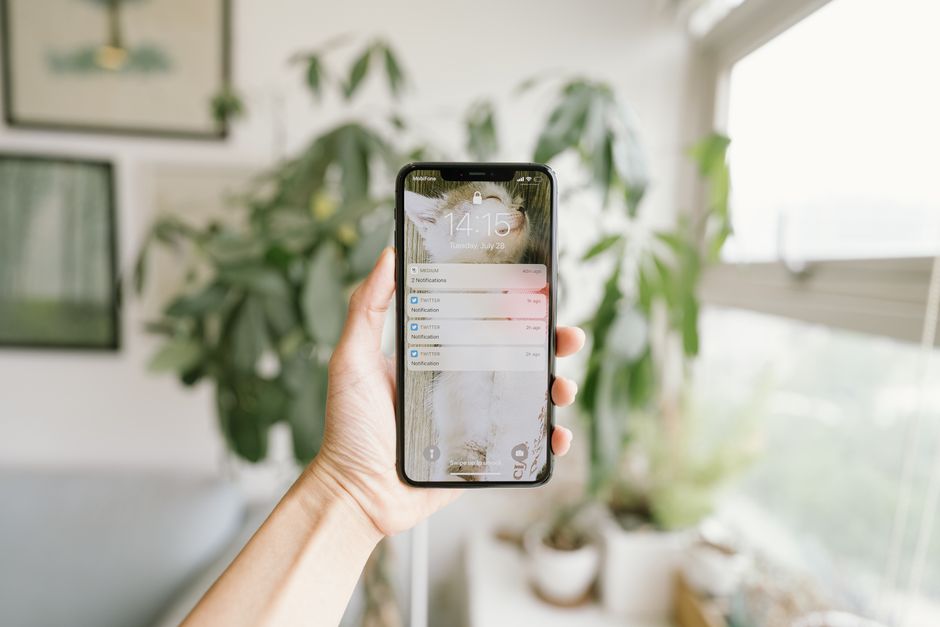
- Today, unfollow or mute 10 accounts, stores or influencers that leave you wanting to buy. Ten is a start; mute more as you notice them.
- Turn off shopping, sale and "back in stock" notifications on your phone and in your email.
- Block one evening a week in your calendar with nothing planned, for example every Wednesday from 6 pm. Protect it like an appointment with a friend.
- Keep it loose, with no to-do list. Use something you already own: cook from the cupboard, read a book from your shelf, ride the bike, call someone from your thanks page.
- If the evening drags, add one small useful thing, like cooking for someone, since free time felt better when spent on something productive [16].
- Once a month, add one line to your want list review: "Where did these wants start?" Mute that source.
When it does not work
- New wants still pour in. Check the monthly "where did it start" line and mute the top source.
- You cannot find a free evening. Too little free time is tied to stress [16]. Start with a 2-hour block and grow it.
- The evening fills with chores. Write "nothing planned" in the calendar entry, so it is a plan, not a gap.
Special groups
- Shift workers and carers. Any 3-hour block works; the evening can be a morning.
- Teenagers. Body image was hit hardest by upward comparison [9], so tune feeds together with them rather than banning apps.
Within 3 weeks fewer wants reach your list, and you have at least one unhurried evening a week spent with what and who you already have.
Track It
For the next 7 days, keep one tally in your phone: each day, write the number of non-essential purchases you made and the number of wants you sent to your 30-day list instead. Unlisted buys count double. On day 7, add them up and rate your "enough" from 1 to 10, where 8 means "I feel I have enough, and I enjoy it." Check again on day 21 and then monthly: aim for fewer purchases than in week 1, more wants on the list than in the basket, and an "enough" score at least 2 points higher than your first.
Skill Check
| Skill | Starting | Solid | Strong |
|---|---|---|---|
| "Enough" score (weekly, 1-10) | Your first score | 2 points better than your first | That level or better, steady for 3 months |
| Gratitude (weeks in the last month with 3-5 specific thanks, 2+ about people) | 0 to 1 | 3 | 4, every month for 3 months |
| Extra buying (non-essential buys per week; unlisted buys count double) | Your first week's count | Half your first count | That lower level, steady for 3 months |
| Spending on others and experiences (times in the last month) | 0 to 1 | 4 (about once a week) | 4 or more, every month for 3 months |
| Room to breathe (free evenings or half-days last week) | 0 | 1 | 2 or more |
| Feeds (accounts that make you want to buy or compare) | Your first count | 10 fewer | None you notice, checked monthly |
Myths
- "Contentment means giving up on goals." Not true. The research links wellbeing to the relative weight of materialistic goals compared with other goals, not to having no goals [3]. You can work hard for a home, a family or a cause.
- "I'll be happy when I get it." For high-materialism shoppers, good feelings peaked while wanting and fell after buying [1].
- "Gratitude only works if you do it daily." Weekly lists for 10 weeks lifted wellbeing in a classic trial [5] [6], and the large review found small gains overall [4].
- "Treat yourself is the best mood boost." Over 6 weeks, kindness to others raised flourishing more than treating yourself, which did not beat controls [14].
- "Giving only works for the rich." Spending on others went with greater happiness in poor and rich countries alike [12].
FAQ
Is wanting things bad? No. Wanting is normal. The problem is when money and possessions sit at the centre of life, which goes with lower wellbeing [2]. The want list lets you buy what still matters after 30 days.
How long before I feel different? The weekly gratitude trial ran for 10 weeks [5], and kindness effects showed over 6 weeks [14]. Give each skill at least a month.
I'm on a very tight budget. Does this apply? Yes. Your "enough" lines can describe needs only. Kind acts that cost nothing count [14], and the want list protects money you cannot spare.
Does buying experiences mean expensive trips? No. A picnic, a class or a shared meal is an experience. What matters is living through something, ideally with others [8] [13].
What if my partner does not want to change? Start with your own lines, thanks and want list. Share what you notice, not rules.
Is this religious? No, though many faiths teach contentment and thanks. The steps here work with or without a faith practice.
Doctor's Note
Talk to a doctor or therapist if discontent comes with low mood on most days for 2 weeks or more, if buying feels out of control or leads to debt, or if letting go of belongings feels impossible or rooms become hard to use, which can be hoarding disorder [11]. A doctor can refer you for support [11]. If you feel unsafe, find a free line at findahelpline.com or call your local emergency number.
Go further
- For why "more" never feels like enough, read Greed and Always Wanting More: Why Enough Never Feels Like Enough.
- For what wealth means beyond money, read Money with Meaning: Rethinking What It Means to Be Rich.
- For more ways to buy less and use what you have, read Buy Less and Enjoy Enough: Wait, Use What You Have.
- For buying time and deeper happy-spending methods, read Spend Money for Happiness: Experiences, Buying Time and Giving to Others.
- For money gratitude, read Feel Richer Without Spending More: Money Gratitude and Calmer Money Choices.
- For frugal living without feeling deprived, read Underconsumption Core Judged: Live Frugally Without Feeling Deprived.
- For children and "I want it!" at the store, read Needs vs Wants, and Handling "I Want It!" at the Store.
- For untying self-worth from money, read Your Worth Is Not Your Net Worth: Untie Self-esteem from Income and What You Own.
- For gratitude in depth, read Gratitude That Actually Works: Once a Week, Specific and Fresh.
- For calm evenings at home, read Build Calm Contentment: Hygge Evenings, Being Happy Alone and the Joy of Pets.
- For status, comparison and income, read Step Off the Status Treadmill: Money, Status and Keeping Up with Others.
- To clear a room or a whole home, read A Home Should Hold Your Life, Not Bury It: How to Declutter.


