

A 6-step plan to spot ultra-processed food in 30 seconds, halve how much you eat in 8 weeks, step off sweet drinks and set up a kitchen where whole food is the easy pick.
Doctor's Note: See your doctor or another health professional if you often feel you cannot stop eating, or if eating feels out of control every week or more. Help works, and it is not about willpower. If you have diabetes, talk to your care team before you change sweet drinks or sweeteners, because the World Health Organization's advice on sweeteners does not cover people who already have diabetes [1]. If you feel unsafe or in crisis, call your local emergency number or find a free helpline at findahelpline.com.
You went out for bread and milk. You came home with a bag of snacks you did not plan on, a cereal that says "natural" and a drink with a cartoon on the label. That is not weakness. Much of this food is built and sold to be hard to resist. In a trial at the US National Institutes of Health, 20 adults lived in a research ward and were offered meals matched for calories, sugar, fat, salt and fibre, and told to eat as much or as little as they liked [2]. On the ultra-processed menu they ate about 500 more calories a day and gained 0.9 kg in 2 weeks; on the unprocessed menu they lost 0.9 kg [2]. You do not need a strict diet to change this. You need to know what to look for, a number to track and a kitchen that works for you.
Here's What's Going On
Food scientists sort food into four groups by how it is processed, a system called NOVA [3]. Group 1 is fresh or minimally processed food: fruit, vegetables, eggs, milk, plain oats, dried beans. Group 2 is kitchen ingredients such as oil, butter, salt and sugar. Group 3 is processed food made from those two, such as canned beans, tinned fish, simple cheese and bread made from flour, water, salt and yeast. Group 4 is ultra-processed food: industrial products made mostly from substances taken out of foods, with additives such as flavourings, colours and emulsifiers that you would not find in a home kitchen [3]. Groups 1 to 3 all fit a healthy diet. Group 4 is the one to cut back.
Why does Group 4 matter so much? A 2025 review in The Lancet pulled together national food surveys, large cohorts and trials. It found that these products push out meals built on whole food, and that they lead to overeating through high energy density, a taste built to be hard to stop, soft textures that go down fast and broken-down food structure [10]. The health links are wide. In a review of 45 pooled analyses covering almost 10 million people, eating more ultra-processed food went with higher risk in 32 of 45 health outcomes, with the strongest evidence for death from heart disease, type 2 diabetes, anxiety and common mental disorders [11]. An earlier review of cohorts with 183,491 people found 25% higher risk of death from any cause in those who ate the most [12]. These studies show links, not proof that each product causes harm, but the controlled trial above shows the calorie effect directly [2].
An earlier review of cohorts with 183,491 people found 25% higher risk of death from any cause in those who ate the most [[12]].
The good news: you do not have to fight every package. A few habits, used every week, do most of the work.
Step 1: Spot It in 30 Seconds With the Kitchen-Stranger Test

WHY THIS MATTERS
You cannot cut what you cannot see. The FAO guide to NOVA gives one simple rule: if the ingredient list has even one item rarely or never used in home kitchens, the product is ultra-processed [3]. The front of the pack will not help you. In Brazil's 5 largest supermarket chains, researchers checked 2,238 ultra-processed products and found that 6 in 10 carried claims or other promotions, with nutrition and health claims the most common [4].
SKILLS THIS STEP BUILDS
- Reading the ingredient list first and the front last.
- Sorting a pack into processed or ultra-processed in 30 seconds.
- Checking the serving size before you trust any number on the label.
- Turn the pack over before you read anything on the front. Ingredient lists on pre-packed food are required by law, even if the format differs by country [3].
- Scan for kitchen strangers [3].
- Near the start or middle: maltodextrin, dextrose, high-fructose corn syrup, invert sugar, fruit juice concentrate, soy protein isolate, hydrogenated oil.
- Near the end: flavourings (including "natural flavours"), flavour enhancers, colours, emulsifiers (such as soy lecithin), thickeners and sweeteners (such as aspartame or stevia compounds).
- Stop at the first one. One kitchen stranger is enough: the food is ultra-processed [3]. You do not need to read the rest.
- Treat a front claim as a cue to read more carefully, not less. "High protein", "multigrain", "made with real fruit", "keto" and "low fat" say nothing about processing [4].
- Check the serving size the numbers refer to. If the pack holds three servings and you eat the whole pack, multiply every number by three.
- Practise tonight. Take 5 packaged foods from your cupboard and sort each into "processed" or "ultra-processed" in 30 seconds. Write down your score out of 5.
- Repeat at your next shop with 5 new products. Aim for 4 out of 5, then 5 out of 5.
Go deeper: the borderline cases
- Bread: one made from flour, water, salt and yeast is processed; mass-produced packaged bread with additives is ultra-processed [3]. Same aisle, different group.
- Yogurt: plain yogurt is minimally processed; fruit yogurt with flavourings or sweeteners is ultra-processed [3].
- Canned and frozen food: canned beans, tinned fish and frozen vegetables are fine staples [3]. Processing alone is not the problem; the kitchen strangers are.
- Cereal and "energy" bars: usually ultra-processed, even when the front looks healthy [3].
Troubleshooting
- "I can't tell if an ingredient is a kitchen stranger." Ask one question: could you buy it on its own in a normal shop and cook with it? Flour, oil, salt and tomatoes pass. Maltodextrin and emulsifiers do not [3].
- "The list is in tiny print or another language." Pick a different product with a list you can read. A short, readable list is itself a good sign.
Within a week you can sort most packs in 30 seconds, and the words on the front stop deciding for you.
Step 2: Count Your Ultra-Processed Items for One Week
WHY THIS MATTERS
A count shows where ultra-processed food really sits in your day, and it gives you a number to beat. In an 8-week US programme, 14 adults tracked their food daily and had it reviewed by a coach [5]. They cut the number of ultra-processed items they ate by almost half, cut calories from those foods by 48.9%, and ate 612 fewer calories a day, with 37% less sodium and 50% less sugar [5]. They also lost an average of 3.5 kg [5]. It was a small pilot with no control group, so take the numbers as a sign of what is possible.
They cut the number of ultra-processed items they ate by almost half, cut calories from those foods by 48.9%, and ate 612 fewer calories a day, with 37% less sodium and 50% less sugar [[5]].
SKILLS THIS STEP BUILDS
- Keeping a simple daily tally.
- Finding your daily average.
- Seeing which items come up most often.
- For 7 days, tally every ultra-processed item you eat or drink. Use a note on your phone or a sheet on the fridge. One can of soft drink is 1. One bowl of sweet cereal is 1. One packaged sandwich is 1.
- Count by item, not by size. A small bar and a big bar are both 1. This keeps the count fast enough to do every day.
- Write down the time and place next to each item: "desk, 3 pm" or "car, after the gym". Patterns show up by day 3 or 4.
- Include a weekend. Weekday and weekend eating often look very different. The programme above also measured intake on two weekdays and one weekend day [5].
- On day 7, add up the total and divide by 7. This is your starting daily average.
- Circle the 5 items that came up most often. These are your first targets.
Troubleshooting
- "I forgot to log a day." Fill it in the next morning as best you can, and keep going. The programme above let people catch up on missed days too [5].
- "Counting makes me anxious about food." Count only drinks and snacks for the first week. If counting feels stressful every day or brings up guilt, stop and talk to a health professional.
- "Almost everything I eat is ultra-processed." That is common. In the US, 58% to 65% of the food supply is ultra-processed [5]. A high starting number just means more room to improve.
By day 7 you have one number, your daily average, and a short list of the items that matter most.
Step 3: Halve Your Count by Week 8, a Few Swaps at a Time
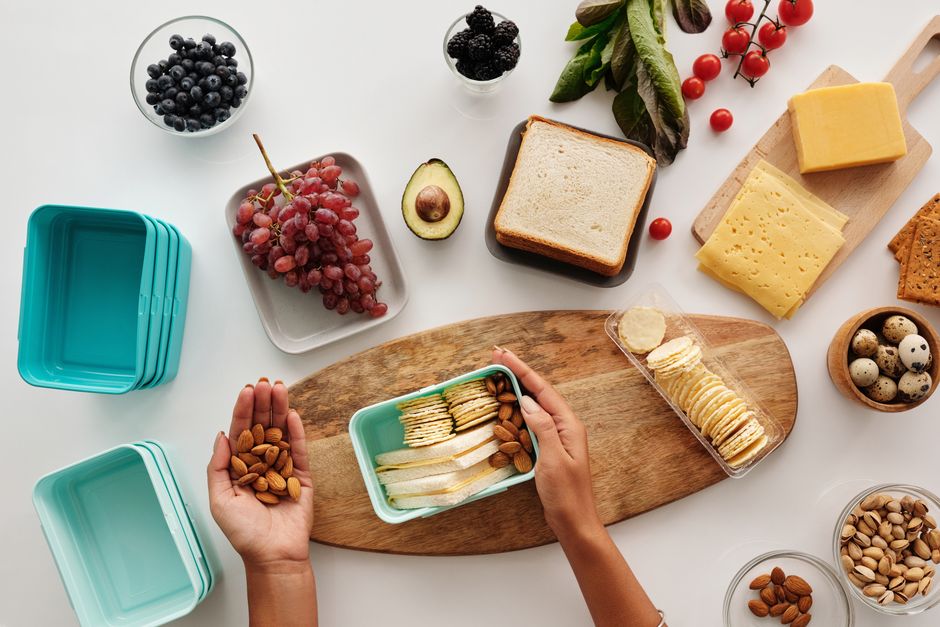
WHY THIS MATTERS
Big changes all at once rarely last. The programme above worked week by week, with meal planning sessions where people picked meals and snacks with few or no ultra-processed foods to prepare [5]. A few foods supply most ultra-processed food in a typical week, so swapping them does most of the work. One of them carries a clear risk: the World Health Organization classes processed meat (ham, bacon, sausages, hot dogs, deli meat) as Group 1, which means there is convincing evidence that it causes colorectal cancer [6].
SKILLS THIS STEP BUILDS
- Choosing the easiest swaps first.
- Adding swaps week by week without losing the old ones.
- Hitting three-quarters of your starting count by week 4 and half by week 8.
- Week 2: from your circled items, pick the easiest third, the ones you would miss least, and swap only those.
- Use the top 5 swap list [3] [6]:
- Soft drinks: water or sparkling water (Step 4 gives the step-down plan).
- Packaged snacks: fruit, a handful of plain nuts, plain yogurt or popcorn you pop at home.
- Sweet cereals: plain oats or a cereal with a short list and no flavourings, sweetened with fruit.
- Processed meat: eggs, tinned fish, beans or chicken you cook yourself. Keep sausages and bacon for occasions.
- Ready meals: eggs with frozen vegetables, beans on wholegrain toast, or a portion from your batch pot (Step 5).
- Each week after that, add 1 or 2 new swaps and keep the old ones.
- Recount for 7 days in week 4. Aim for about three-quarters of your starting average.
- Recount again in week 8. Aim for half. The programme above reached almost half in 8 weeks [5].
- Keep 1 or 2 favourites on purpose. Eat them slowly, at the table, out of a bowl rather than the pack.
Troubleshooting
- "I swapped the snack but now I'm hungry at 4 pm." Make the swap filling: fruit plus nuts, or yogurt plus oats, rather than fruit alone.
- "My count went back up in week 5." Look at the time-and-place notes from Step 2. A stressful week or a missed shop usually explains it. Restart with the swap that slipped first.
- "Whole food costs more." In the US, ultra-processed food costs about $0.55 per 100 calories against $1.45 for unprocessed food [5]. Lean on the cheap staples from Step 1 (oats, dried or canned beans, eggs, frozen vegetables) and see the budget article in Go further.
By week 8 your daily count is close to half your starting number, with no food banned outright.
Step 4: Step Off Sweet Drinks Over 2 to 3 Weeks

WHY THIS MATTERS
Sweet drinks are the fastest place to cut sugar. A single can of sugar-sweetened soft drink holds up to 40 g (about 10 teaspoons) of free sugars [7]. The World Health Organization recommends that adults and children keep free sugars under 10% of their daily energy, and says going below 5%, roughly 25 g or 6 teaspoons a day, brings extra health benefits [7]. One can is more than your whole day's 25 g. Free sugars include sugar added by the maker, the cook or you, plus the sugar in honey, syrups and fruit juice; the sugar in whole fruit, vegetables and milk is not counted [7].
SKILLS THIS STEP BUILDS
- Stepping down slowly so your taste adjusts.
- Making water the default drink.
- Keeping free sugars near 25 g a day on most days.
- Week 1: mix sweet drinks half and half with water or sparkling water.
- Week 2: go to a quarter sweet drink, or switch to sparkling water with lemon, lime, crushed berries or mint.
- Week 3: plain or flavoured water by default. Keep a sweet drink for occasions.
- Count juice as a sweet drink. The sugar in fruit juice is a free sugar [7]. Eat the fruit whole instead.
- Watch hidden sugar in sauces too: 1 tablespoon of ketchup has about 4 g of free sugars [7].
- Use diet drinks only as a short bridge, not the goal. The WHO advises against using non-sugar sweeteners for weight control, because the evidence shows no long-term benefit for body fat in adults or children [1]. It suggests lowering the sweetness of your diet overall, with fruit and unsweetened drinks [1].
Troubleshooting
- "Plain water is boring." Keep a jug of water with sliced citrus, cucumber or berries in the fridge, so the flavoured option is the ready one.
- "I drink soft drinks for the caffeine." Swap to plain tea or coffee you sweeten less each week, so you keep the lift without the sugar.
- "I have diabetes and use diet drinks." The WHO sweetener advice does not apply to people with diabetes [1]. Talk to your care team before you change anything.
By week 3 water is your normal drink, and a sweet drink is something you choose, not a habit.
Step 5: Set Up Your Kitchen So Whole Food Is the Easy Pick

WHY THIS MATTERS
Willpower runs out at the end of a long day. What you see first and what is closest is what you eat. A review of 18 studies found that changing the order or distance of foods changes what people choose [8]. A Cochrane review of 24 trials found that placing a snack farther away cut how much of it people ate by a moderate amount, and that having fewer less-healthy options cut how often people picked them [9]. The effect was bigger the farther away the food was placed [9]. Most of these trials were short and in labs, so the certainty is low, but the change costs nothing [9].
SKILLS THIS STEP BUILDS
- Putting whole food where you see it first.
- Putting snacks where you have to work to reach them.
- Keeping fewer ultra-processed options in the house.
- Put a bowl of washed fruit on the counter where you see it when you walk in.
- Wash and cut vegetables once or twice a week and keep them at eye level in the fridge, in a clear box.
- Move snacks to a high cupboard or an opaque box, as far from where you sit as you can. Distance matters [9].
- Keep fewer kinds of snacks in the house. Fewer options means fewer picks [9].
- Stock fine staples that need no kitchen-stranger ingredients: frozen vegetables and fruit, tinned beans and fish, plain yogurt, eggs, plain oats and bread with a short list [3].
- Write your shopping list from your swaps before you go, and shop the list.
Troubleshooting
- "Someone else in my house buys the snacks." Ask for one shared cupboard for them, up high or out of sight, rather than a ban.
- "The fruit goes off before we eat it." Buy less fruit more often, or keep frozen fruit for yogurt and oats.
Batch-cook one pot a week
A pot you cooked at the weekend is as fast as a ready meal on a tired night. In a UK study of 11,396 adults, those who ate home-cooked main meals more than 5 times a week ate 62 g more fruit and 98 g more vegetables a day than those who ate them fewer than 3 times, and were 28% less likely to be overweight [13]. This shows a link, not proof.
- Once a week, cook one big pot (soup, chilli, stew or curry) from frozen or fresh vegetables, beans, tinned tomatoes, oil and spices, all foods with no kitchen strangers [3].
- Freeze at least 4 single portions, labelled with the date, for the nights you would buy a ready meal.
Within 2 weeks the better choice is the first thing you see and the fastest thing to eat at home, with ready portions in the freezer.
Step 6: Track Your Progress and Make It Stick
WHY THIS MATTERS
Food marketing never stops, so these skills only work while you use them. Habits slip in stressful weeks, so a regular recount tells you early when to restart. In the programme in Step 2, daily tracking with regular feedback was part of the plan that halved the count [5].
SKILLS THIS STEP BUILDS
- Recounting at set points.
- Restarting fast after a slip.
- Adapting the plan to your stage of life.
- Recount for 7 days in weeks 4, 8 and then once a month.
- Write your averages in one place so you can see the line fall.
- If your count rises for 2 weeks in a row, go back to Step 3 and restart with the swap that slipped first.
- Re-run the 30-second test (Step 1) at each recount, on 5 new products.
- Every month, add one new swap to replace one you have now made a habit.
Special groups
- Children: the WHO sugar advice applies to children as well as adults [7], and children's intake is often much higher, close to 25% of energy in some countries [7]. Kids' plates have their own article in Go further.
- Diabetes: the WHO sweetener advice does not cover people with diabetes [1]. Work with your care team on drinks and sweeteners.
- Pregnancy: lower-contact programmes in pregnancy cut ultra-processed food only a little, or not at all [5]. Ask your midwife or doctor for regular support if you are pregnant and want to cut back.
- Tight budget: see the troubleshooting in Step 3, and the budget articles in Go further.
By month 3 your count stays near half your starting number, and you notice and fix slips within 2 weeks.
Conclusion
You do not have to give up every package or follow a diet. Read the list, not the front. Count for a week. Swap a few items at a time. Step off sweet drinks. Put whole food in front and cook one pot a week. Most of the change comes from a handful of foods and the way your kitchen is set up.
What to Do Next
Tonight, take 5 packs from your cupboard and do the 30-second test. Tomorrow, start your 7-day count.
5 Myths About Ultra-Processed Food
Myth 1: "All processed food is bad."
False. Canned beans, tinned fish, frozen vegetables, simple cheese and bread made from flour, water, salt and yeast are processed, not ultra-processed, and fit a healthy diet [3].
Myth 2: "A health claim on the front means it's a good choice."
False. Claims are common on ultra-processed products: 6 in 10 in Brazil's biggest supermarkets carried claims or other promotions [4].
Myth 3: "It's only about calories, sugar and fat."
Not quite. In the NIH trial, meals were matched for calories, sugar, fat, salt and fibre, and people still ate about 500 more calories a day on the ultra-processed menu [2].
Myth 4: "Diet drinks solve the sugar problem."
False for weight control. The WHO advises against non-sugar sweeteners for weight control because they show no long-term benefit for body fat [1].
Myth 5: "Fruit juice counts as fruit."
False. The sugar in fruit juice counts as free sugar; the sugar in whole fruit does not [7].
FAQ
Do I have to cut out ultra-processed food completely?
No. The goal here is half your starting count by week 8, with 1 or 2 favourites kept on purpose. The programme that cut items by almost half did not ban food [5].
How do I know if something is ultra-processed without a phone app?
Read the ingredient list. One ingredient rarely or never used in home kitchens is enough [3].
Will I lose weight?
Maybe, but it is not guaranteed. People in the NIH trial lost 0.9 kg in 2 weeks on the unprocessed menu [2], and people in the 8-week programme lost 3.5 kg on average [5]. Both were small studies.
Is processed meat really that risky?
The WHO classes it as Group 1, meaning there is convincing evidence it causes colorectal cancer [6]. That is why it is in the top 5 swaps.
How much sugar is 25 g?
About 6 teaspoons [7]. One can of sugar-sweetened soft drink can hold up to 40 g [7].
Skill Check
| Skill | Starting | Solid | Strong |
|---|---|---|---|
| 30-second test: sort 5 packs by ingredient list alone | Your first score | 4 of 5 | 5 of 5 |
| Ultra-processed count: 7-day daily average | Your first average | Three-quarters of your first average | Half or less, held for 2 months |
| Sweet drinks per week | Your first count | Half your first count | 1 or fewer a week, free sugars under about 25 g most days |
| Kitchen set-up | Snacks on the counter | Fruit out, snacks out of sight | Fruit out, cut vegetables at eye level, fewer snack types in the house |
| Home-cooked main meals per week | Your first count | 3 to 5 | More than 5, with a batch pot in the freezer |
| Swaps kept | None yet | 3 | 5 or more, including all of your top 5 |
Skills Developed
- You can spot ultra-processed food in 30 seconds from the ingredient list and check the serving size.
- You can count your ultra-processed items and halve the count within 8 weeks.
- You can step off sweet drinks over 2 to 3 weeks and keep free sugars near 25 g a day.
- You can set up your kitchen so whole food is the easy pick, with one batch-cooked pot a week.
Go further
- Cut Ultra-processed Food and Food Dyes from Kids' Plates for children's food and lunchboxes.
- Make Your Own Sauces, Dressings, Drinks and Snacks to Replace Ultra-processed Ones for homemade versions of the top swaps.
- Find Your Easiest Healthy Eating Wins and Where to Start if you want to pick a different first habit.
- Eat Well on a Budget and Waste Less and Cut Your Grocery and Food Delivery Bill Without Eating Worse for cheaper shopping.
- Cook Dinner at Home Most Nights with 5 Basic Recipes for home cooking skills and recipes.
- Easy Meals for One: Cooking, Delivery and Shared Meals if you cook for yourself.
- Eat Healthily in Your Own Food Culture to apply this to your family's dishes.
- Cook with Less Charring, Smoke and Plastic for additives, contaminants and cooking methods.


