

Five steps to spot ultra-processed food in 30 seconds, halve how much you eat in 8 weeks, step off sweet drinks and set up a kitchen where whole food is the easy pick.
You went out for bread and milk. You came home with a bag of snacks you did not plan on, a cereal that says "natural" and a drink with a cartoon on the label. That is not weakness. Much of this food is built and sold to be hard to resist. In a trial at the US National Institutes of Health, 20 adults were offered meals matched for calories, sugar, fat, salt and fibre [1]. On the ultra-processed menu they ate about 500 more calories a day and gained 0.9 kg in 2 weeks [1]. You do not need a strict diet to change this. You need to know what to look for, a number to track and a kitchen that works for you.
Step 1: Spot It in 30 Seconds With the Kitchen-Stranger Test

WHY THIS MATTERS
You cannot cut what you cannot see. The FAO guide to NOVA gives one simple rule: if the ingredient list has even one item rarely or never used in home kitchens, the product is ultra-processed [2]. The front of the pack will not help you. In Brazil's 5 largest supermarket chains, 6 in 10 ultra-processed products carried claims or other promotions [3].
- Turn the pack over before you read anything on the front. Ingredient lists on pre-packed food are required by law, even if the format differs by country [2].
- Scan for kitchen strangers [2].
- Near the start or middle: maltodextrin, dextrose, high-fructose corn syrup, invert sugar, fruit juice concentrate, soy protein isolate, hydrogenated oil.
- Near the end: flavourings (including "natural flavours"), flavour enhancers, colours, emulsifiers (such as soy lecithin), thickeners and sweeteners (such as aspartame or stevia compounds).
- Stop at the first one. One kitchen stranger is enough: the food is ultra-processed [2]. You do not need to read the rest.
- Treat a front claim as a cue to read more carefully, not less. "High protein", "multigrain", "made with real fruit", "keto" and "low fat" say nothing about processing [3].
- Check the serving size the numbers refer to. If the pack holds three servings and you eat the whole pack, multiply every number by three.
- Practise tonight. Take 5 packaged foods from your cupboard and sort each into "processed" or "ultra-processed" in 30 seconds. Write down your score out of 5.
Step 2: Count Your Ultra-Processed Items for One Week
WHY THIS MATTERS
A count shows where ultra-processed food really sits in your day, and it gives you a number to beat. In an 8-week US programme, 14 adults cut the number of ultra-processed items they ate by almost half and ate 612 fewer calories a day [4].
- For 7 days, tally every ultra-processed item you eat or drink. Use a note on your phone or a sheet on the fridge. One can of soft drink is 1. One bowl of sweet cereal is 1. One packaged sandwich is 1.
- On day 7, add up the total and divide by 7. This is your starting daily average.
- Circle the 5 items that came up most often. These are your first targets.
Step 3: Halve Your Count by Week 8, a Few Swaps at a Time
WHY THIS MATTERS
A few foods supply most ultra-processed food in a typical week, so swapping them does most of the work. One of them carries a clear risk: the World Health Organization classes processed meat (ham, bacon, sausages, hot dogs, deli meat) as Group 1, which means there is convincing evidence that it causes colorectal cancer [5].
- Week 2: from your circled items, pick the easiest third, the ones you would miss least, and swap only those.
- Use the top 5 swap list [2] [5]:
- Soft drinks: water or sparkling water (Step 4 gives the step-down plan).
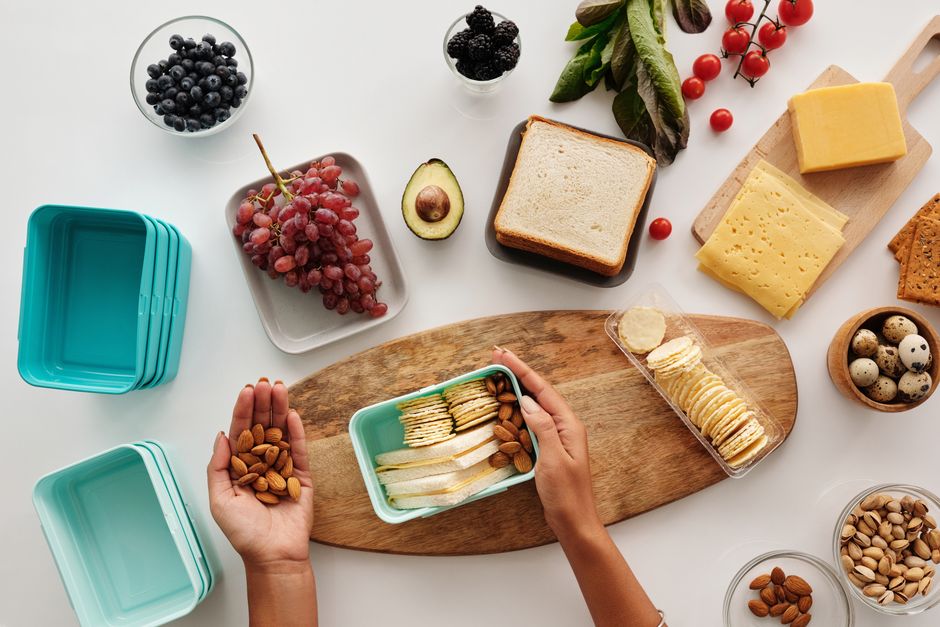
- Packaged snacks: fruit, a handful of plain nuts, plain yogurt or popcorn you pop at home.
- Sweet cereals: plain oats or a cereal with a short list and no flavourings, sweetened with fruit.
- Processed meat: eggs, tinned fish, beans or chicken you cook yourself. Keep sausages and bacon for occasions.
- Ready meals: eggs with frozen vegetables, beans on wholegrain toast, or a portion from your batch pot (Step 5).
- Each week after that, add 1 or 2 new swaps and keep the old ones.
- Recount for 7 days in week 4. Aim for about three-quarters of your starting average.
- Recount again in week 8. Aim for half. The programme above reached almost half in 8 weeks [4].
- Keep 1 or 2 favourites on purpose. Eat them slowly, at the table, out of a bowl rather than the pack.
Step 4: Step Off Sweet Drinks Over 2 to 3 Weeks

WHY THIS MATTERS
Sweet drinks are the fastest place to cut sugar. A single can of sugar-sweetened soft drink holds up to 40 g (about 10 teaspoons) of free sugars [6]. The World Health Organization says keeping free sugars below about 25 g (6 teaspoons) a day brings extra health benefits [6]. One can is more than your whole day's 25 g.
- Week 1: mix sweet drinks half and half with water or sparkling water.
- Week 2: go to a quarter sweet drink, or switch to sparkling water with lemon, lime, crushed berries or mint.
- Week 3: plain or flavoured water by default. Keep a sweet drink for occasions.
- Count juice as a sweet drink. The sugar in fruit juice is a free sugar [6]. Eat the fruit whole instead.
- Use diet drinks only as a short bridge, not the goal. The WHO advises against using non-sugar sweeteners for weight control, because the evidence shows no long-term benefit for body fat in adults or children [7].
Step 5: Set Up Your Kitchen So Whole Food Is the Easy Pick

WHY THIS MATTERS
Willpower runs out at the end of a long day. What you see first and what is closest is what you eat. A review of 18 studies found that changing the order or distance of foods changes what people choose [8]. Placing a snack farther away cuts how much of it people eat [9].
- Put a bowl of washed fruit on the counter where you see it when you walk in.
- Wash and cut vegetables once or twice a week and keep them at eye level in the fridge, in a clear box.
- Move snacks to a high cupboard or an opaque box, as far from where you sit as you can. Distance matters [9].
- Stock fine staples that need no kitchen-stranger ingredients: frozen vegetables and fruit, tinned beans and fish, plain yogurt, eggs, plain oats and bread with a short list [2].
- Write your shopping list from your swaps before you go, and shop the list.
Batch-cook one pot a week
A pot you cooked at the weekend is as fast as a ready meal on a tired night. Adults who ate home-cooked main meals more than 5 times a week ate more fruit and vegetables than those who ate them fewer than 3 times [10].
- Once a week, cook one big pot (soup, chilli, stew or curry) from frozen or fresh vegetables, beans, tinned tomatoes, oil and spices, all foods with no kitchen strangers [2].
- Freeze at least 4 single portions, labelled with the date, for the nights you would buy a ready meal.
Within 2 weeks the better choice is the first thing you see and the fastest thing to eat at home, with ready portions in the freezer.
Track It
For 7 days, keep one number: how many ultra-processed items you eat each day. Recount in week 4 and week 8 and write the averages in one place. Three-quarters of your first average is solid; half, held to week 8, is strong. If your count rises 2 weeks in a row, restart with the swap that slipped first.
When to Get Help
See your doctor or another health professional if you often feel you cannot stop eating, or if eating feels out of control every week or more. If you have diabetes, talk to your care team before you change sweet drinks or sweeteners, because the World Health Organization's advice on sweeteners does not cover people who already have diabetes [7]. If you feel unsafe or in crisis, call your local emergency number or find a free helpline at findahelpline.com.
Read next
- Cut Ultra-processed Food and Food Dyes from Kids' Plates for children's food and lunchboxes.
- Make Your Own Sauces, Dressings, Drinks and Snacks to Replace Ultra-processed Ones for homemade versions of the top swaps.
- Eat Well on a Budget and Waste Less and Cut Your Grocery and Food Delivery Bill Without Eating Worse for cheaper shopping.
- Cook with Less Charring, Smoke and Plastic for additives, contaminants and cooking methods.


