
How to read your stage from a simple diary, know when to see a doctor, cut hot flushes with drug-free methods, and protect your bones and muscle with training and food.
Doctor's Note: See a doctor if menopause signs start before age 40 [1], if your periods are very heavy, or if you bleed between periods or after sex [2]. Symptoms that hurt your health or daily life are worth talking through with a health worker, who will look at your history and what matters to you [1]. Hormone therapy is still the most effective treatment for hot flushes, so it is the backup when these steps are not enough [3]. Bring your diary. Chest pain or pressure, sudden breathlessness, or pain spreading to the arm, neck or jaw means call your local emergency number now.
Here's What's Actually Going On in Your Body
You wake at 3 a.m. with damp sheets. Your last period came 9 days late. In a meeting, the word you wanted simply would not come. You are not imagining it, and you are not alone.
Menopause happens when the ovaries stop working the way they used to and the level of the hormone oestrogen in your blood falls [1]. The change is usually gradual. It most often starts with changes in your cycle, and the time from those first signs until one year after your last period is called perimenopause [1]. Symptoms vary a lot from one woman to the next. Some have few, while others have flushes, night sweats, poor sleep, mood changes or changes in flow that affect daily life [1].
Two things matter most for the decades after. Women's lower risk of heart disease compared with men fades as oestrogen falls, and bone loss at menopause is a major driver of osteoporosis and fractures [1]. That is why this plan pairs symptom relief with training and food.
Hormone levels keep shifting until about 2 years after your last period, and flushes are most likely in the late transition and those first 2 years after [4]. The middle of the change is the hardest part, and it does settle.
The plan runs in a set order. First you keep a diary and read your stage from it. Then you learn the signs that need a doctor. Next you cut flushes, led by self-hypnosis. Last, you protect bone and muscle with lifting, impacts and food.
Step 1: Keep a One-Minute Daily Diary

WHY THIS MATTERS
A diary turns a blur of bad nights into numbers you can act on. Endocrinologist Jerilynn Prior built the Daily Perimenopause Diary at her research centre at the University of British Columbia for exactly this purpose, and it is free to download [10]. The same diary gives you the cycle lengths you need to read your stage in Step 2 and the starting score you judge every later step against.
SKILLS THIS STEP BUILDS: Symptom logging (Practical), Pattern spotting (Analytical)
- Download the diary and start it on the evening of the first day of your period. Call that day 1 [11].
- Each night before bed, fill every box: flow, the number of day and night flushes, how strong they were, sleep, mood and stress. Use Prior's scale from 0 (none) to 4 (the worst it has ever been) [11].
- Write 0 when you had nothing, because a blank tells you nothing. If you forget a day, leave it out rather than filling it in from memory [11].
- Track flow two ways: the number of soaked pads or tampons each day, and a flow score from 0 (none) to 4 (clots, or a change every hour) [11].
- Add a line for your own possible triggers: each alcoholic drink, hot drink and spicy meal. You will use it in Step 4.
- At the end of each week, add up your top 3 symptom scores for the week. This is your weekly total.
Troubleshooting
- You keep forgetting. Leave the diary on your pillow or set one evening alarm. A missed day is fine; a guessed day is not [11].
- Every day feels like a 4. Keep 4 for the worst it has ever been [11]. A scale with no room at the top cannot show you getting better.
After 2 to 3 cycles you have your cycle lengths, your top 3 symptoms and a weekly total to measure every change against.
Step 2: Read Your Stage From Your Cycle Lengths
WHY THIS MATTERS
An international panel of scientists, the STRAW+10 group, agreed on simple bleeding signs for each stage of the change, and recommended using them whatever a woman's age, ethnicity, body size or lifestyle [4]. Knowing your stage makes new symptoms less frightening and tells you roughly what comes next.
SKILLS THIS STEP BUILDS: Stage reading (Analytical), Planning ahead (Practical)
- From your diary, write the length of each cycle: day 1 of one period to the day before the next one.
- Compare each cycle with the one before. A difference of 7 days or more that happens again within the next 10 cycles marks the early transition [4].
- A gap of 60 days or more with no period marks the late transition. This stage lasts on average 1 to 3 years, and flushes are likely in it [4].
- After 12 months in a row with no period and no other cause, you have reached menopause [1]. Mark the date of your last period in the diary; you only know it looking back.
- Keep using contraception until those 12 months have passed, because pregnancy is still possible in perimenopause [1].
- Expect the first 2 years after your last period to be the peak time for flushes, then a settling phase. The whole early stage after menopause lasts about 5 to 8 years [4].
Special groups
- You have had a hysterectomy or an endometrial ablation. Bleeding cannot be used to stage you; only hormone tests can [4]. Track flushes, sleep and mood anyway, because you can still have the other changes [1].
- You use hormonal contraception or another medicine that stops your periods. You may have no periods to count but still notice the other changes [1]. Log symptoms and ask your doctor how to read them.
- Surgery that removes both ovaries, chemotherapy or radiation can bring menopause on suddenly [1]. Your stage is then set by the treatment, not by your cycle.
You can name your likely stage, know which phase comes next, and stop guessing whether a late period is "normal for now".
Step 3: Know When the Diary Says See a Doctor
WHY THIS MATTERS
Most changes of perimenopause are normal, but a few need a check. Menopause before 40 is called premature menopause and can have medical causes [1]. Heavy bleeding can cause iron deficiency anaemia, which a blood test can find [2]. Your diary gives your doctor facts instead of a vague memory.
SKILLS THIS STEP BUILDS: Red-flag spotting (Health literacy), Appointment readiness (Practical)
- If your cycles change or flushes start before age 40, book a visit and bring the diary [1].
- Check your flow against the heavy-period signs: changing a pad or tampon every 1 to 2 hours, bleeding for more than 7 days, or passing clots larger than about 2.5 cm [2]. If heavy periods affect your life, see a doctor [2].
- Bleeding between periods or after sex is always a reason to see a doctor [2].
- If you feel tired or short of breath a lot and your flow is heavy, ask whether a blood test for iron makes sense [2].
- If symptoms still hurt your sleep, work or mood after the steps below, ask about your options, including hormone therapy [1][3].
- Before the visit, write three lines at the top of your diary: your stage from Step 2, your top 3 symptoms with their weekly totals, and your one main question.
Troubleshooting
- You are told "it's just your age". Show the weekly totals and say how they affect your life; symptoms that affect your well-being deserve a discussion of options [1].
- Surprise flooding at work. A menstrual cup is one option for heavy flow [2], alongside spare pads and dark clothing.
You know the few signs that need a check, and if you do go, you arrive with a dated record and a clear question.
Step 4: Cut Hot Flushes: Cool Bedroom, Fewer Drinks, Skipped Triggers, Self-Hypnosis and Soy
WHY THIS MATTERS
Flushes are most likely in the late transition and the first 2 years after your last period [4], and the drug-free options differ a lot in strength. The North American Menopause Society's 2023 review rates clinical hypnosis at its top evidence level and recommends it [3]. In a 2025 trial with 250 women after menopause, a daily 20-minute hypnosis recording used at home for 6 weeks cut hot flush scores by 53%, against 41% with a white-noise recording, and 90% felt it helped, against 64% [5].
The same review found the evidence for a cool room, avoiding triggers and soy foods too limited to call them treatments [3]. They are still low-risk comfort steps, and your diary shows whether they work for you. Alcohol has the clearest signal: in Korean women before menopause, drinking even under 10 g a day went with higher odds of bothersome flushes, and the odds rose with each step up, to about 3.5 times at 40 g or more a day [6]. For soy, Japanese women who ate the most soy foods had about half the risk of new moderate or severe flushes over 6 years [12], and soy isoflavones taken for 6 weeks to 12 months cut flush frequency by about 21% in trials [13]. A larger review called the soy effect modest, about 0.8 fewer flushes a day [14].
SKILLS THIS STEP BUILDS: Flush relief through the change (Physical), Trigger testing with your log (Analytical)
Tonight: the bedroom
- Set up the bedroom for flushes: a fan by the bed, 2 thin covers instead of 1 heavy duvet, a cool room and cold water within reach. By day, wear layers you can take off in 10 seconds.
- When a flush starts, breathe out slowly and tell yourself, "This will pass in a few minutes." A flush usually lasts several minutes [1]. Slow breathing is for staying calm, not a cure: paced breathing on its own was not recommended for flushes [3].
Weeks 1 to 2: drinks and logged triggers
- Keep alcohol at 0 to 3 drinks a week; more alcohol went with more bothersome flushes [6].
- For 2 weeks, use the trigger line in your log: each drink, hot drink and spicy meal, and the time of your next flush. A trigger that comes before your worst flushes on 3 or more days gets skipped for 2 weeks; then compare your flush total.
Weeks 1 to 6: self-hypnosis recordings
- Find a structured hot-flush hypnosis recording, or a clinician trained in clinical hypnosis. The trial recordings used a relaxation induction followed by images of coolness [5].
- Listen to one 20-minute session every day for at least 6 weeks, and tick each session in your log, as the trial's women did with their practice log [5]. When a flush starts during the day, call up the cool image and hold it.
From week 3: soy foods
- Add 1 to 2 soy foods a day as ordinary food, the way the Japanese cohort ate them [12]: half a cup of edamame, a glass of soy milk, or a palm-sized piece of tofu or tempeh. Judge it after 6 weeks, the shortest trial length in the review [13]. Starting it 2 weeks after hypnosis lets your log show which change helped.
Special groups
- Breast cancer survivors. About 1 in 4 women in the 2025 trial had a history of breast cancer, and the authors call remote hypnosis a safe option [5]. Ask your cancer team before adding soy foods or supplements.
Troubleshooting
- No change at week 2. The trial judged at week 6 [5]. Keep going.
- Better, then worse when you stop. The best maintenance dose of hypnosis is not yet known [5], so go back to daily practice for a while.
- No clear trigger. Many women find none. Keep the bedroom steps and put your effort into the recordings.
- Still bad at week 6. Bring your log to your doctor; hormone therapy remains the most effective treatment for flushes [3].
Within 6 weeks your log shows fewer or milder flushes, you know which of your own triggers are worth skipping, and nights are easier even on bad days.
Step 5: Protect Bone and Muscle Through the Change With Heavy Lifting and Jumps
WHY THIS MATTERS
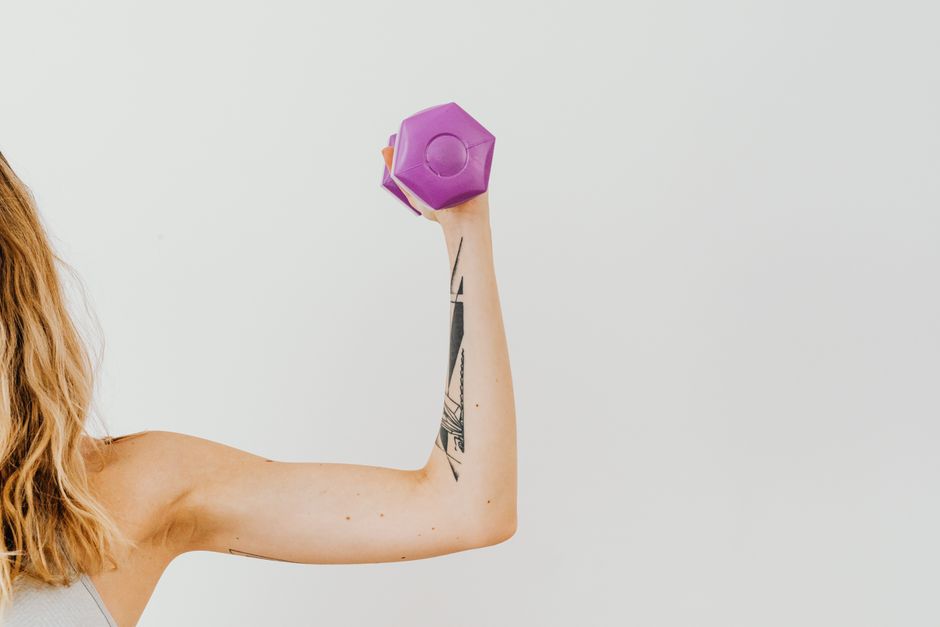
Bone loss at menopause is a major reason women face higher rates of osteoporosis and fractures [1], so the change is the time to start loading your bones. Across 53 trials in women after menopause, high-intensity exercise raised spine bone density more than low or moderate exercise, and resistance training, ideally with impact, worked best at the spine and hip [7]. UK bone experts recommend lifting 2 to 3 days a week and about 50 moderate impacts on most days [15].
SKILLS THIS STEP BUILDS: Heavy lifting 2 to 3 times a week (Physical), Impacts on most days (Physical)
- Lift 2 to 3 days a week and cover every muscle group, including your back [15]: squat, hip hinge, row, press and a loaded carry.
- Learn each move with a light weight first, then use a weight you can lift only 8 to 12 times with good form, building to 3 sets [15]. When 12 good reps on every set feel easy, raise the weight a little, so the load rises gradually [15].
- Add moderate impacts on most days: heel stamps, jogging on the spot, low jumps or hops. Start with 1 or 2 sets of 10 and add a set when it feels easy, up to about 50 impacts a session, for example 5 sets of 10 with a short walk between [15].
- Write the weight and reps of every lift, and your jump count, in the same log as your symptoms. On bad flush or sleep weeks, keep the sessions and drop to 1 set rather than stopping.
Special groups
- Osteoporosis without spine fractures. The same plan applies, but avoid deep, repeated or loaded forward bending of the spine, such as sit-ups [15].
- A spine fracture or several fractures from minor falls. Keep impacts to the level of brisk walking, about 20 minutes a day, and get a physiotherapist's plan [15].
- Joint or heart problems. Get a plan from a physiotherapist or doctor before heavy lifting or jumping.
Troubleshooting
- Sore after the first sessions. Muscle soreness and joint discomfort were the main side effects reported in bone exercise trials [15]. Drop to 1 set for a week, then build again.
Within 8 to 12 weeks you lift more weight than in week 1 and reach about 50 impacts on most days.
Step 6: Eat for Bone and Muscle Through the Change: Calcium From Food and Protein at Each Meal
WHY THIS MATTERS
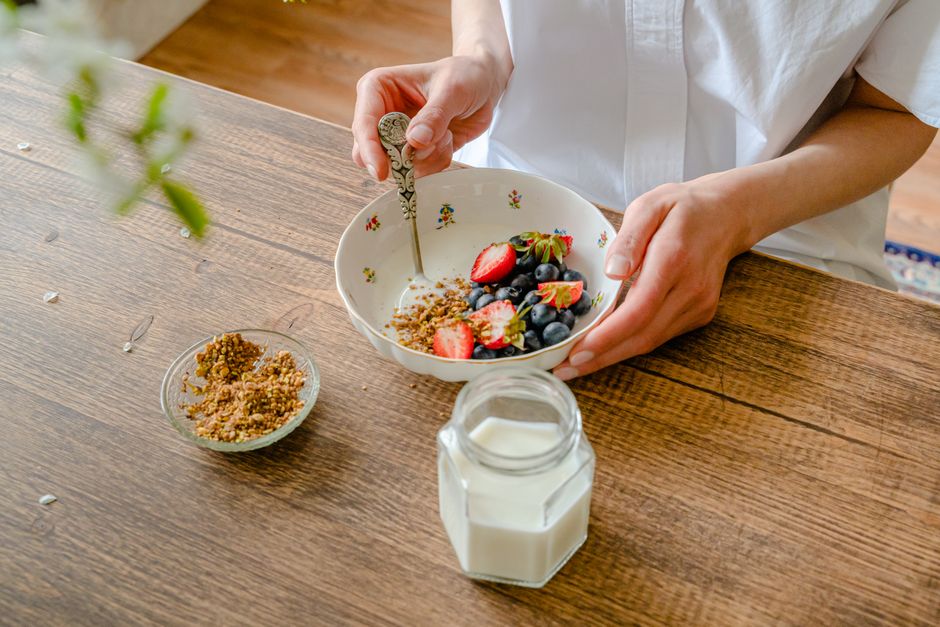
When you eat too little calcium, your body takes what it needs from bone, and a long-term shortfall weakens it [9]. With bone loss speeding up at menopause [1], calcium from food is the part of your plate to fix first. Lifting also needs protein: muscle researchers propose at least 1.2 g per kg a day with age, and found no sound evidence that this harms healthy kidneys or bones [8].
SKILLS THIS STEP BUILDS: Calcium from food first (Nutrition), Protein for the change (Nutrition)
- Aim for about 1,000 mg of calcium a day from food first. Germany's reference sets 1,000 mg for adults from 19, including after 51 [9]; some countries set more after 50, so follow your own country's number.
- Build calcium into the same meals that ease your flushes: calcium-fortified soy milk or calcium-set tofu count for both Step 4 and this step. Other sources: milk, yogurt and canned fish with soft bones.
- Put a protein food at every meal and aim for your weight in kg times 1.2 [8]; at 70 kg that is about 84 g a day. For working out and spreading your number, see How Much Protein You Need Daily, and How to Get It.
- For 3 days, count your calcium foods and protein meals in your log, then fix the weakest meal first.
Special groups
- Kidney disease. Ask your doctor before you raise your protein; the no-harm finding is for healthy kidneys [8].
Within 2 weeks most of your calcium comes from food and most meals hold a protein food.
Conclusion
You have the full plan: a diary, a stage, the signs that need a doctor, a set of flush steps led by hypnosis, and training plus food for bone and muscle. Start with the diary tonight, add hypnosis and lifting this week, and judge everything at 6 weeks.
What to Do Next
- Tonight: download the diary and fill your first night [10].
- This week: book your first strength session and start your daily 20-minute hypnosis audio [5][15].
- At week 6: compare your weekly totals and use the Skill Check below to pick your next focus.
Myths
Myth 1: "Your periods just stop one day."
For most women the change is gradual and starts with changes in the cycle long before the last period [1]. Changing cycle lengths are often the first sign [4].
Myth 2: "If my periods are irregular, I can't get pregnant."
False. Pregnancy is still possible in perimenopause, so contraception is advised until 12 months in a row with no period [1].
Myth 3: "Lifting heavy weights is dangerous for women's bones."
UK bone experts recommend progressive resistance training even for people with osteoporosis, and the main side effects in trials were muscle soreness and joint discomfort [15]. Higher-intensity exercise helped spine bone more than gentle exercise [7].
Myth 4: "More protein will damage my kidneys and bones."
Muscle researchers found that these often-cited harms have no scientific foundation in healthy people [8]. If you have kidney disease, ask your doctor first.
Myth 5: "A cold room and deep breathing will cure hot flushes."
They can make flushes easier to bear, but a major 2023 review did not find enough evidence to recommend cooling or paced breathing as treatments [3]. Clinical hypnosis has much stronger evidence [3].
FAQ
How long do hot flushes last?
They are most likely in the late transition and the first 2 years after your last period [4]. Some women have symptoms for several years [1].
How soon will self-hypnosis work?
In the 2025 trial, women listened every day for 6 weeks, and the gains were measured at week 6 [5]. Give it the full 6 weeks.
Is a little alcohol fine?
Even less than 10 g a day was linked to higher odds of bothersome flushes, and more alcohol meant higher odds [6]. Less is better for flushes.
I've had a hysterectomy. How do I know my stage?
Bleeding cannot be used to stage you after a hysterectomy or endometrial ablation; only hormone tests can [4]. Track your other symptoms and talk to your doctor.
Do soy supplements work better than soy foods?
Supplements cut flushes modestly in trials [13], and soy foods were linked to fewer new flushes in a Japanese cohort [12]. Neither is a strong treatment [3], so food first is a fair start.
When should I think about hormone therapy?
When flushes or other symptoms still affect your life after these steps. Hormone therapy remains the most effective treatment for flushes [3], and your doctor will weigh it against your history [1].
Skill Check
Score yourself now and again at week 6.
| Step | Starting | Solid | Strong |
|---|---|---|---|
| 1. Daily diary | No diary | Most nights filled | Every night for 2 or more cycles, with weekly totals |
| 2. Read your stage | Unsure of your stage | Cycle lengths written for 2 or more cycles | You can name your stage and what comes next |
| 3. See a doctor when needed | Can't name the warning signs | Can name 2 | Can name all: under 40, heavy flow, bleeding between periods or after sex, ongoing impact |
| 4. Cut hot flushes | No changes yet | Bedroom set up, 0 to 3 drinks a week, triggers logged | Daily hypnosis recording for 6 weeks, triggers skipped, 1 to 2 soy foods a day, result judged |
| 5. Lifting and impacts | No lifting | 1 session a week, some impact days | 2 to 3 sessions a week and about 50 impacts on most days |
| 6. Protein and calcium | Protein at 1 meal | Protein at 2 meals | Protein at every meal and calcium near 1,000 mg, mostly from food |
Skills Developed in This Article
Primary Skills:
- Reading your stage from a daily diary of cycles and symptoms
- Knowing when to see a doctor
- Cutting hot flushes with self-hypnosis, trigger testing and soy foods
- Protecting bone and muscle with lifting, impacts, protein and calcium
Go further
- How Much Protein You Need Daily, and How to Get It: your protein number and how to spread it.
- Feed Your Bones: Calcium, Protein, Magnesium and Potassium: the full bone-nutrition guide.
- Cool Hot Flushes and Night Sweats Naturally: the full hypnosis course and other drug-free flush options.
- Lift Weights to Protect Muscle, Bone and Heart After Menopause: a full lifting program, strength tests and balance drills.
- Lift for Strong Bones: Impact and Heavy Training That Build Bone: bone training for any age.
- Eat Through Menopause the Japanese Way: Soy, Fish, Seaweed and Flax: the wider Japanese way of eating.
- Clear Brain Fog and Sleep Through the Night in Menopause: sleep and memory in the change.
- Steady Your Moods Through Perimenopause and Menopause: mood swings and low mood.
- Calm Heavy Periods and Rebuild Your Iron with Food: heavy flow and iron foods.
- Keep the Vagina and Bladder Comfortable After Menopause: dryness and bladder changes.
- Menopause at Work: Hot Flushes, Brain Fog and Asking for Adjustments: how to talk to your employer.
- Help the Women in Your Life: What Men Should Know About Periods, Pregnancy and Menopause: a guide for partners.


