

It is the night before the test. You read your notes three times, every line looks familiar, and you go to bed feeling ready. A week later, half of it is gone. Your memory is fine. Rereading makes a page feel known without making it stay. In a classic experiment, students who reread a passage did better on a test 5 minutes later, but students who closed the text and recalled it kept more 2 days and 1 week later, even though the rereaders felt more confident [1].
Step 1: Close the Book and Write for 2 Minutes Before You Reread Anything

WHY THIS MATTERS
Pulling a memory out is itself a learning event. A meta-analysis of practice testing found that practice tests helped learning more than restudying and more than every other comparison condition it looked at [8]. Effort matters: tests where you had to recall the answer gave bigger gains than tests where you only had to recognise it [9]. The catch is timing. Rereading wins if the test is 5 minutes away, and recall wins once days have passed, which is when you actually need the knowledge [1]. Mistakes are part of the method, as long as you check them: correcting a wrong answer raised retention a week later by 494% in a study of 258 people, while feedback after a right answer made little difference [10].
In this plan, the 2-minute recall is the habit that starts every session and feeds the other four skills: its gaps become your cards (Step 2), your explain-aloud list (Step 3) and your "shaky" column (Step 4).
- When you sit down to study, close the book, notes and screen before anything else.
- Set a 2-minute timer and write everything you remember about the last session on a blank page, in any order. Keep writing until the timer ends.
- Open the source and mark every missing or wrong point in a different colour. Say each corrected point once in your own words [10].
- Copy each marked point to one place: a card for Step 2 if it is a fact, or a line on your explain-aloud list for Step 3 if it is an idea.
- Only then start new material.
Within 2 to 3 weeks your blank pages fill faster, and you remember more of last week's material without extra study time.
Step 2: Book Five Review Dates on the Day You Learn
WHY THIS MATTERS
Spreading reviews out beats doing them in one block. A review of 839 comparisons in 317 experiments found that the best gap between study sessions grows as the time you need to remember grows [11]. A study of more than 1,350 people put numbers on it: about 20 to 40% of the time until a test 1 week away, and about 5 to 10% of the time for a test 1 year away [3]. So the gaps in your calendar should widen for things you need for longer.
A study of more than 1,350 people put numbers on it: about 20 to 40% of the time until a test 1 week away, and about 5 to 10% of the time for a test 1 year away [[3]].
- On the day you learn something, write five review dates in your calendar: 1 day, 3 days, 1 week, 2 weeks and 1 month later.
- Put one idea on each flashcard from your Step 1 gaps, question on the front, answer on the back.
- On each review date, answer from memory first, then check. A card you missed starts again at the 1-day gap after you read the answer [10].
- Set the last gap by your goal. For an exam in 1 week, review after 1 to 2 days. To keep something for a year, keep reviewing every 3 to 5 weeks [3].
After 3 to 4 weeks most reviews pass at the 1-week date, and last month's material is still there.
Step 3: In Practice Blocks, Shuffle Look-alike Problems and Say Each Idea Aloud
WHY THIS MATTERS
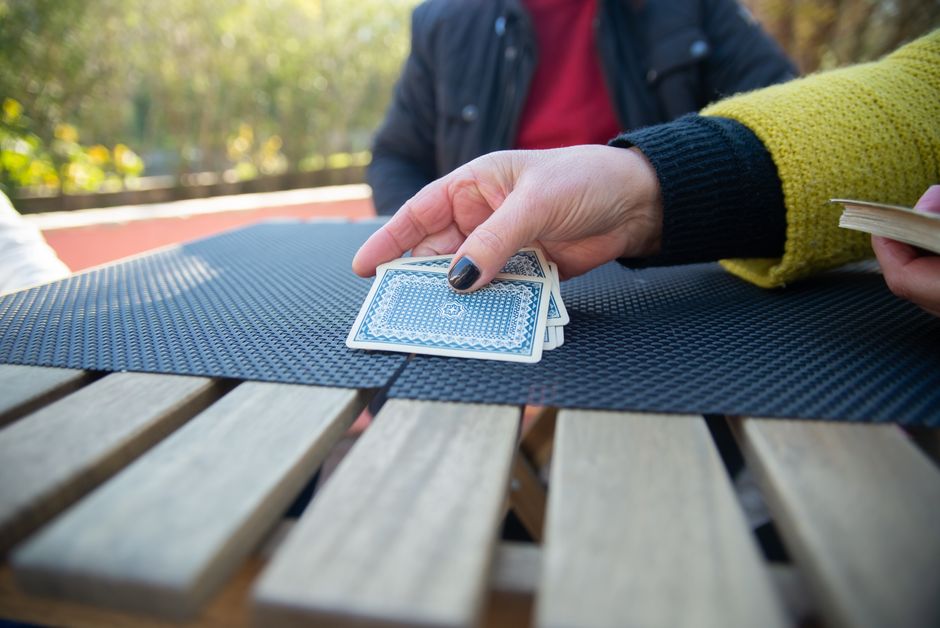
A meta-analysis of interleaved learning found a moderate gain overall from mixing problem types, larger when the types look alike, while for word lists learning in blocks did better [12]. Explaining in your own words was rated moderately useful in the big review of study methods [2].
- Once you can do each problem type alone, shuffle 3 look-alike types into one practice set [12]. Name each problem's type before solving it.
- Keep new word lists in blocks [12].
- For each idea on your explain-aloud list from Step 1, explain it aloud in plain words in under a minute, with one example.
- Open the source, mark what you left out, and say the corrected version once [10].
Within 2 weeks you can pick the right method for a problem with no chapter title, and explain each new idea with an example.
Step 4: Judge What You Really Know
WHY THIS MATTERS
The feeling of "I know this" is a poor guide right after study. Students who only reread felt surer they would remember, yet recalled less a week later than students who tested themselves [1]. Timing fixes much of this. Judgments of learning made a short time after study predict later recall better than judgments made right away, especially when you see only the question and not the answer; every one of 45 people in one study showed this effect [4].
- Wait at least a few minutes after study, ideally until the next day, before you judge a topic [4].
- Judge from the question alone. Cover the answer, look only at the question, and rate yourself before you try it [4].
- Before each self-quiz, write the score you expect, such as "8 out of 10". Take the quiz without notes, mark strictly against the source (half right counts as wrong), and write the real score next to it.
- Sort topics into three columns: "know", "shaky" and "don't know". Give the first half of your next session to "don't know" and "shaky".
- Move a topic to "know" only after you recall it correctly on 2 different days.
Within 3 weeks your predicted and real scores sit closer together, and your study time goes to the topics that need it.
Step 5: Plan Your Study Calendar Around Rested Nights and a Walk
WHY THIS MATTERS
A meta-analysis of studies from 1970 to 2020 found that one night without sleep after learning hurt memory, and one night without sleep before learning hurt it more than twice as much [5]. Adults are advised to sleep 7 or more hours a night [6]. A single session of aerobic exercise gave a moderate to large boost to long-term memory in the studies reviewed [7].
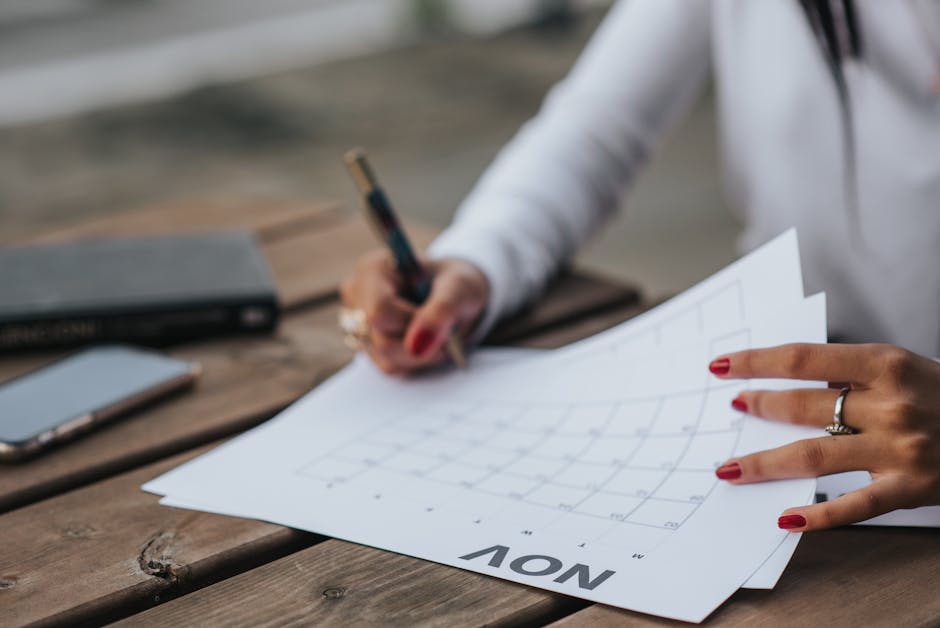
- When you book the review dates in Step 2, also mark the night before and after each big study day as 7-hour nights [6] [5].
- Never plan an all-nighter into the calendar. If time runs out, stop at bedtime and do the Step 1 recall in the morning [5].
- Add a brisk walk next to each study block, before or after it [7].
Within 1 to 2 weeks you start sessions clearer and your morning recall is fuller, without adding study hours.
Track it
For 7 days, keep one line a day: your predicted score and your real score on a 5-question closed-book quiz about something you studied 1 to 2 days earlier. On day 7, write your average real score and your average gap. Check both again on day 21. Aim for a higher score and a smaller gap.
Skill Check
| Skill | Starting | Solid | Strong |
|---|---|---|---|
| Test, don't reread | Mostly rereading | About half your sessions use blank-page recall | Most sessions start closed-book |
| Space it out | Your first count of reviews done on their due day | Most reviews done on time | 8 of 10 or more on time |
| Mix and explain | Problem types done in blocks | Mixed sets of 3 types, type named first | You explain each idea aloud with an example and no gaps |
| Know what you know | Your first gap between predicted and real score | A smaller gap | 1 point or less out of 10 |
| Protect it | Late nights before tests | 7+ hours most study nights | 7+ hours around every big study day, plus a walk |
Myths
- "Rereading and highlighting are good study." Mostly false. They were rated low value because they do not consistently improve results [2].
- "If it feels familiar, I know it." False. Rereaders felt more confident and remembered less a week later [1].
- "Don't test yourself until you're ready, or you'll learn your mistakes." False, if you check your answers. Feedback after a wrong answer raised later retention a lot [10].
- "Multiple choice quizzes are just as good." Partly false. Recall tests gave bigger gains than recognition tests [9].
- "An all-nighter buys more study time." False. Losing sleep before learning hurt memory the most [5].
FAQ
- How long should a blank-page recall be? Start with 2 minutes per chunk. The point is effortful recall, not length [9].
- Do I have to use exactly 1, 3, 7, 14 and 30 days? No. It is a starting point. What matters is that gaps grow with how long you need to remember [3].
- Should I mix everything? No. Mix types that look alike and are easy to confuse; keep new word lists in blocks [12].
- When is the best time to judge if I know something? A while after study, with only the question in front of you [4].
- Is a walk really part of studying? A single aerobic session improved long-term memory in the studies reviewed [7].
Doctor's Note
If you keep struggling to focus, read or remember after several weeks of using these steps, ask a learning specialist, school counsellor or your doctor to check for a learning difficulty, an attention problem or a sleep disorder. See a doctor too if you often wake up tired after a full night in bed, snore loudly or fall asleep in the day. If memory loss comes on suddenly with confusion, weakness or slurred speech, call your local emergency number.
Go further
- Sleep habits that fix most poor sleep: Sleep Deeper, Wake Better.
- Focus during a study session, phone and distractions: Protect Your Attention.
- Starting when you keep putting study off: How to Stop Procrastinating.
- Daily systems for ADHD, autism and dyslexia: Different Minds, Different Maps.
- Sleep before exams and all-nighters in depth: Sleep to Learn and Remember.
- Blurting, practice tests and closed-book recall in depth: Test Yourself the Right Way.
- Choosing review gaps for any deadline: Space Your Reviews.
- Making and keeping up flashcards: Flashcards That Work Without Burnout.
- Interleaving and using ideas in new places: Mix It Up So It Transfers.
- The Feynman loop and 'why?' questions: Explain It to Learn It.
- Teaching others to learn: Teach to Learn: Explain It to Someone Else.
- Subject-by-subject methods: Study Each Subject the Right Way.
- Building your own course: Teach Yourself Anything.
- Online videos and courses: Learn from Online Videos and Courses Without Wasting Time.
- Whether learning styles are real: Are Learning Styles Real?.


