

Try three short practices, keep the one that fits your beliefs, hold your attention for 5 minutes a day, calm your body first, look back on each day, and keep going on the days that fall apart. For people of every faith and people with none.
Doctor's Note: Mindfulness and meditation help many people, but they are not right for everyone, and some people feel worse when they practise [1]. Stop or slow down if practice brings panic, feeling unreal or cut off from your body, or old trauma rushing back, and talk to a trained teacher, a therapist or your doctor. If you have a heart or lung condition, ask your doctor before you change how you breathe.
What Is Actually Going On When You Sit Still
It is 10 at night. You sit on the edge of the bed, phone face down, and close your eyes. For three breaths your mind goes quiet. Then the to-do list arrives, then a conversation from lunch, then a worry about money. After a minute you open your eyes and decide you are bad at this.
You are not. What just happened is the practice. Mindfulness meditation means sitting quietly and paying attention to the breath, sounds or the body, and bringing your attention back whenever the mind wanders [1]. The goal is not to make thoughts go away. It is to see them as mental events that come and go, which is very hard at first and becomes possible with gentle persistence [1]. Every time you notice "I drifted" and come back, you have done one repetition of the skill, the way one lift is one repetition in the gym.
Step 1: Choose Your Practice: Breath Focus, a Mantra, then Loving-Kindness, a Week Each
WHY THIS MATTERS
The practice you keep is the one that suits your temperament and beliefs, and you cannot know which that is until you try a few. A review of 20 habit studies with 2,601 people found that individual choice was one of the things that shaped how strong a habit became, and that self-selected habits generally grew stronger [3]. The same review found that how people felt about the behaviour, their "affective judgement", also shaped habit strength [3]. In plain words: the practice you enjoy and chose yourself is the one that sticks.
- Pick one chair and one time for the whole three weeks. Morning works well for many people, since morning habits generally grew stronger in the habit review [3]. Set a gentle 5-minute timer. Sit upright and relaxed, with your eyes closed or resting on the floor a metre ahead.
- Week 1, breath focus. Feel the air at your nostrils or your belly rising and falling. Silently count each out-breath from 1 to 10, then start again at 1. If you lose count or find yourself at 17, go back to 1 without fuss.
- Week 2, a breath prayer or mantra. Split one short phrase across the breath: "Be still" on the in-breath and "and know" on the out-breath, or "Peace" and "be with me". Use a line from your own tradition if you have one (a Psalm line, a name of God, dhikr, the Jesus Prayer, a mantra), or a neutral word such as "calm" or "here".
- Week 3, loving-kindness or a short prayer. Silently wish "May you be safe, may you be well, may you be at ease" to yourself, then someone you love, then someone neutral such as a shop assistant, then everyone. Keep the focus on kind wishes rather than on feeling others' pain, since loving-kindness had the stronger effect in the review [4]. If you pray, do it in your own words: a moment of quiet, a word of thanks, a name of someone you care about, then simply listen.
- Score each week on two questions from 0 to 10: "I looked forward to it" and "I felt settled afterwards." The first score matters because how you feel about a habit shapes its strength [3].
- At the end of week 3, keep the practice with the highest total. Never keep one that clashes with your beliefs, and drop any practice that leaves you feeling worse, since some people find mindfulness does not help them or makes them feel worse [1].
By day 21 you have tried three practices, kept the one you chose, and written down why. You can notice a wandering mind and come back without scolding yourself.
Step 2: Sit or Pray for 5 Minutes at the Same Time and Place, and Return
WHY THIS MATTERS
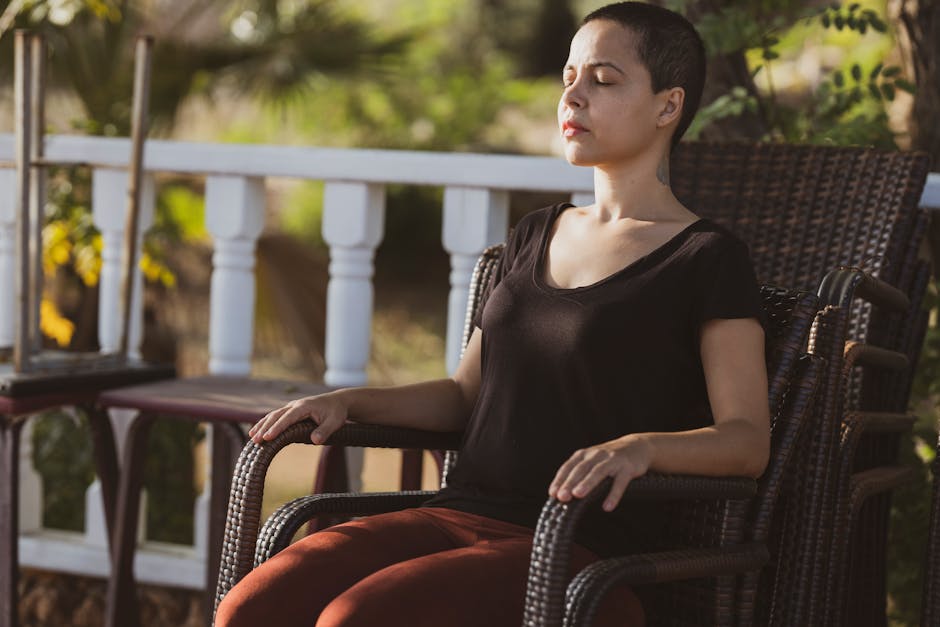
Whether you meditate or pray, the core skill under every form is the same: rest attention on one thing, notice when it leaves, and bring it back [1]. It is normal for thoughts and worries to crowd in as soon as you stop [1]. Seeing them as events that come and go, instead of orders you must follow, is what lets you stand back from them and notice their patterns [1]. That is why a sit full of returns is a good sit, not a failed one.
- Set up the same way every day: same chair, same time, phone on silent in another room, timer set to 5 minutes. This set-up is your preparatory habit [3].
- Take three slower breaths, then let the breath run on its own. Rest your attention on the anchor you kept in Step 1: the feeling of breath at the nose or belly, your breath prayer or mantra, or the loving-kindness phrases. If you pray, you can open with a short line such as "Here I am" and close with "Amen" or a bow, so the 5 minutes have a clear start and end.
- When you notice you have drifted, silently name what pulled you away in one word: "planning", "worry", "memory", "hearing". Naming thoughts and feelings this way helps some people become aware of them [1]. Then return to the anchor.
- Make each return soft. No sigh, no "come on". Say "back" the way you would call a puppy, not the way you would scold one.
- When the timer ends, sit for three more breaths before you open your eyes. Then make one tally mark for every return you remember. You do not need an exact count; a rough number is enough to see a trend.
Within 4 weeks you sit for 5 minutes at your fixed time on most days, you notice a drift sooner, and your weekly count of rounds of 10 is creeping up.
Step 3: Settle Your Body Before You Sit or Pray

WHY THIS MATTERS
Your 5-minute sit or prayer goes better when the body arrives calm, so give it 2 to 5 minutes of slow breathing as a doorway into practice, the way some traditions begin prayer with a few quiet breaths. Slow breathing usually means 4 to 10 breaths a minute [5]. At about 6 breaths a minute, the heart and breathing fall into step: the natural rise and fall of heart rate with each breath, called heart rate variability, reaches its peak, an effect researchers call the "resonant frequency" [5]. Baroreflex sensitivity, the body's fast blood-pressure control, is also strongest around this rate [5]. Breathing at 6 a minute also improved oxygen levels and felt easy to keep up in healthy people and in people with chronic heart failure [5].
- Sit as you will for your practice. Put one hand on your belly.
- Breathe in gently through your nose for about 5 seconds, letting your belly rise, then out for about 5 seconds. That is 6 breaths a minute, the resonant rate [5]. Count "in, 2, 3, 4, 5; out, 2, 3, 4, 5" in your head, or watch a second hand.
- Do this for 2 minutes, about 12 breaths, as the opening of every sit or prayer. When you sit longer, or the day was hard, stretch it to 5 minutes. Five minutes was enough to lower anxiety in the French study [6].
Within 2 weeks you open every sit or prayer with 2 minutes at about 6 breaths a minute, with ease, and you settle into your anchor sooner than before.
Step 4: Close the Day With the Examen Prayer or a 3-Line Journal

WHY THIS MATTERS
Your morning sit trains attention; an evening look back turns the same attention on your day, so stillness starts to change how you live. Choose a prayer form or a written form, whichever fits your beliefs. The Examen is a way of reflecting on your lived experience, and in its own tradition its purpose is to see where God has been present in your day [7]. It has five steps, as set out in the Spiritual Exercises of Ignatius of Loyola, and takes about 10 to 15 minutes [7]. It begins with gratitude for the gifts of the day, then asks for light to look honestly at your flaws as well as your gifts [7].
- Choose one fixed time each night, such as right after you brush your teeth. Sit for three slow breaths in silence first.
- If you pray, follow Ignatius's five steps [7]. One, give thanks for the gifts of the day. Two, ask for light to see your day honestly. Three, go back over the day, hour by hour, and notice what drew you closer to God and what pulled you away. Four, ask forgiveness where you fell short. Five, decide with hope what you will do tomorrow.
- If you prefer a version without prayer, write 3 lines in a notebook by your bed. Line 1, thanks: one or two specific things that went well, and why. Line 2, what happened: the moment that moved you most, and what you felt. Line 3, tomorrow: one change, small enough to do before noon.
- Keep it to 5 minutes on busy nights. One honest line is better than none.
Within 3 weeks you review your day on 5 nights a week, and each week you make one change that came straight from your notes.
Step 5: Keep Meditation or Prayer Alive on Chaotic Days, and Sit With Others Twice a Month

WHY THIS MATTERS
A sit or prayer practice usually breaks not on ordinary days but on the day a child is sick or the train is late, so plan your smallest practice before that day comes. New health habits took a median of 59 to 66 days to feel automatic, with means of 106 to 154 days and a range from 4 to 335 days between people [3]. Expect about 2 months, and possibly much longer [3]. Over that time, frequency was one of the factors that shaped habit strength [3], so a 1-minute sit or prayer done daily protects your practice better than a long one done now and then. The full science of habit building belongs to its own article (see Go further); here it only sets the size of your minimum.
- Set a 1-minute version of the practice you kept in Step 1: 6 slow breaths with your anchor, your breath prayer or mantra said three times, one round of loving-kindness phrases, or a one-line Examen ("Thank you for ___; tomorrow I will ___"). On a chaotic day, this counts as practice.
- Write your recipe in Fogg's form: "After I put the kettle on / park the car / say my morning prayer], I will [take 6 slow breaths]." Stick it where the first action happens [[8].
- Celebrate the moment you finish: a small smile, a quiet "Good, done", or a whispered thank-you. Fogg's method asks you to celebrate every success, however small [8].
- If you miss a day, restart the next day at your usual time and place. Do not double up. One full sit tomorrow beats two rushed ones.
- Book 2 group sessions a month in your calendar now: a service or prayer meeting at your church, mosque, temple, synagogue or gurdwara, a meditation group or sangha, a prayer circle, an online sit, or a friend who practises. Arrive 5 minutes early and use them for your own anchor. Mindfulness programmes worked across different ways of delivery in the stress review [2], so an online group counts.
Over 8 weeks you never miss 2 days in a row, and you practise with others twice a month.
Track It: Know Whether Your Practice Is Working
ACTION STEPS
- Each night, write three numbers: minutes practised (the 1-minute minimum counts), returns (your rough tally), and a 0 to 10 "inner peace" score, where 0 is "none at all" and 10 is "deeply at peace, even when busy".
- On day 7, count your practice days and work out your average peace score. This is your baseline.
- On day 21, compare. Aim for practice on at least 5 days a week, no 2 missed days in a row, and a higher average score than in week 1.
What to Do Next
- Tonight, choose your chair and your time, and write the first recipe: "After I ___, I will sit for 5 minutes."
- Tomorrow, start week 1 of the three-practice trial and make your first tally of returns.
Myths
Myth 1: "Meditation means emptying your mind."
Not true. The aim is to see thoughts as mental events that come and go, and to return to your anchor when you drift, not to stop thinking [1].
Myth 2: "You need 30 minutes or more for it to count."
Not necessarily. The WHO stress guide is built on a few minutes a day [9], and in the loving-kindness review the minutes spent meditating did not change the size of the effect [4].
Myth 3: "Meditation is safe and helpful for everyone."
Most people find it helpful, but not everyone. Some people find it does not help, or makes them feel worse [1].
FAQ
Is meditation against my religion?
You choose the content. A breath prayer, rosary, dhikr or a sacred word can be your anchor, and the Examen is itself a prayer from the Christian tradition [7]. Use only what fits your beliefs.
What if I can't stop thinking?
You don't need to. Thoughts crowding in is common, and with gentle persistence you learn to see them come and go [1]. Each return is one repetition.
How soon will I feel a difference?
Some people feel calmer after one 5-minute slow-breathing session [6]. Stress changes from mindfulness programmes were measured over weeks [2], and the habit itself takes about 2 months to settle [3].
When should I see a doctor or therapist?
If practice brings panic, feeling cut off from yourself, old trauma or low mood that lasts, stop and get support. If you have a heart or lung condition, ask your doctor before slow-breathing practice.
Skill Check
| Skill | Starting | Solid | Strong |
|---|---|---|---|
| Choosing a practice | You have not tried any yet | You tried 3 for a week each and picked one | You know why you chose it and use a backup when needed |
| Attention (5 minutes, count 1 to 10) | Your first count of full rounds | 20% more rounds than your first time | That level, steady for 3 months |
| Slow breathing at about 6 a minute | Under 1 minute with ease | 3 minutes | 5 minutes, easily |
| Daily review | 0 to 2 nights a week | 5 nights a week | 5+ nights, with one weekly change from your notes |
| Practice days (last 14 days, 1-minute minimum counts) | 0 to 4 | 8 to 10 | 12 to 14 |
| Practice with others (per month) | 0 | 1 | 2 or more |
| Inner peace score (weekly, 0 to 10) | Your first score | 2 points above your first | That level, steady for 3 months |
Go further
- Learn from the World's Meditation and Prayer Traditions explores vipassana, Zen, mantra, yoga nidra and prayer in depth.
- Build a Habit That Sticks explains habit science in full.
- Breath Prayer: Turn Every Breath Into a Moment of Connection shows how to write and use your own breath prayer through the day.


