

How to start with one drawer for 15 minutes, sort with 4 boxes and two questions, get things out of the house within a week, give everyday things a home, and keep it clear with a 10-minute evening reset and two rules at the door.
Doctor's Note: Mess on its own is not an illness. See a doctor or mental health professional if clutter blocks exits or stops you cooking, sleeping or bathing in the rooms meant for it, or if letting things go causes strong distress. That pattern can be hoarding disorder, and talking therapy (cognitive behavioural therapy, CBT) reduces it: across 12 treated groups with 232 people, symptoms fell with a large effect [1].
Why This Matters
You're late, and the keys are somewhere under the mail, the bags or the pile on the chair. Most of us know that feeling. In a survey of 1,394 adults, mostly US women who had contacted a professional-organising group, more clutter went with a weaker sense of home and lower satisfaction with life [3]. In a study of 30 dual-income couples who filmed tours of their own homes, wives who used more words about clutter and unfinished projects had flatter daily stress-hormone (cortisol) patterns and a mood that sank over the day; wives who described their homes as restful showed the opposite [7]. Both studies show links, not proof that clutter causes these effects.
The goal isn't a perfect or empty house. It's a home that works for you: you can find things, sit down and rest. This article teaches one order that works for any drawer, shelf or room: start small, sort with 4 boxes, get things out the door, give what stays a home, then keep it clear with short daily habits.
Step 1: Start Small: One Drawer or the Entry Table, 15 Minutes

WHY THIS MATTERS
A whole house of clutter is thousands of small decisions about objects, and that is what makes it feel too big. In 3 US samples (students, younger adults and older adults), people who found it harder to decide about their things and put off getting rid of them reported more clutter problems [2]. Clearing one drawer, one shelf or the entry table caps the number of objects in front of you, and a clear surface you can see at the end shows the method works in your own home.
- Walk through your home and list your clutter hot spots: counters, chairs, the entry, the spare room.
- Choose your first area: small, easy to see and quick to finish. The entry table or the kitchen drawer you open every day are good first picks.
- Book 15 minutes for it at a set time, and set a timer.
- Take everything out, sort it with Step 2, and put back only what stays.
- When the timer rings, stop, even mid-drawer. Book the next 15 minutes for the next spot on your list.
One small space is clear for good, and you have a list of the next spots in order.
Step 2: Sort Into 4 Boxes and Ask 2 Questions

WHY THIS MATTERS
Clutter is mostly decisions put off [2]. A fixed set of boxes and two quick questions turn each item into a decision you can make in seconds. The questions also fight a bias we all have: once we own something, we value it more than before. In classic experiments, people given a coffee mug asked for far more to give it up than others would pay to buy the same mug, and fewer mugs changed hands than expected [4]. "Would I buy it again today?" puts you back in the buyer's shoes.
The 4 boxes
- Keep: you use it, and it goes back in this space.
- Donate or sell: in good condition, but not for you any more.
- Recycle or trash: broken, stained, expired or unusable.
- Belongs elsewhere: you keep it, but it lives in another room.
- Empty the drawer or shelf completely and wipe it.
- Pick up each item and ask: "Do I use it? Would I buy it again today?" Two no's means it goes.
- Put it straight in one of the 4 boxes. No "maybe" pile.
- Put back only the keep box.
- Before the timer ends, walk the "belongs elsewhere" box round the house and put each thing in its room.
- Set aside old paint, cleaners, oils, batteries and pesticides for a hazardous-waste drop-off; these count as household hazardous waste [8].
- Take unused or expired medicines to a take-back point, such as a pharmacy that accepts them; this is the best option for most medicines [9].
Caution: Never pour household chemicals down the drain, on the ground or into storm drains, and check before putting them in the regular trash; this can pollute and harm people's health [8]. Rules differ by place, so check your city or council website.
Each session ends with a clear space and every item decided, not just moved to another pile.
Step 3: Get It Out the Door Within 7 Days, Keepsakes Last
WHY THIS MATTERS
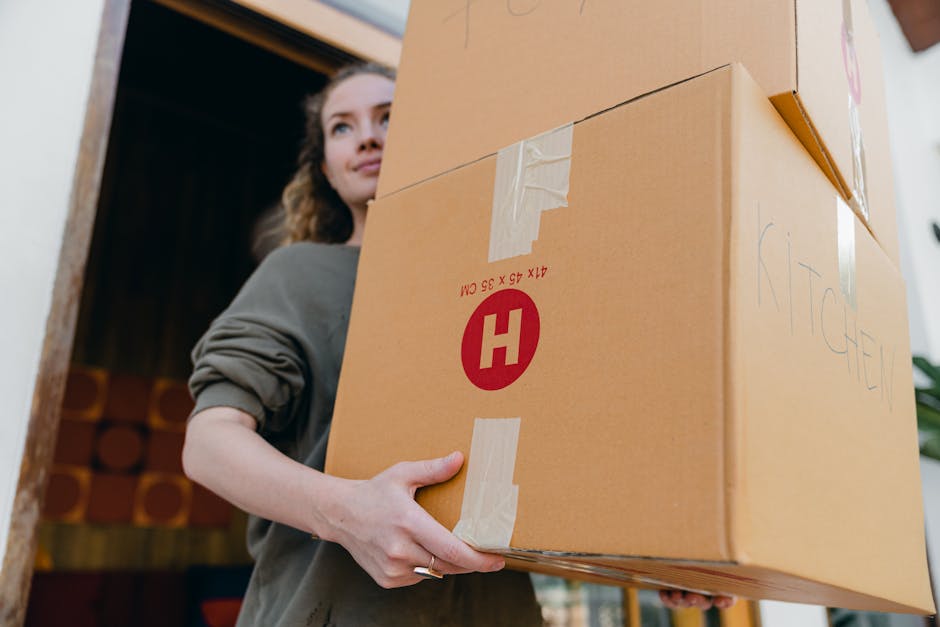
A full "go" box sitting in the hall is just clutter in a new spot. Delaying disposal is part of how clutter builds [2], so things only leave when there is a date and a place. Keepsakes are the hardest to decide, so they come last, once deciding has become easier.
With keepsakes, what people fear losing is usually the memory, not the object. In a donation drive in 6 university residence halls, the halls urged to photograph sentimental items first gave 613 items against 533 (about 15% more), and 5 lab experiments showed the photo eases the feeling of losing part of yourself [5].
- Write a drop-off date on each "go" box, no more than 7 days away.
- Put the box straight in the car or by the front door, not back in a cupboard.
- Book the drop-off in your calendar like an appointment, on a day you already pass a donation point.
- List things to sell within 7 days. If they haven't sold by the drop-off date, donate them.
- Leave sentimental things, gifts and heirlooms until last.
- Before a keepsake goes, take a photo of it and write one line about the memory it holds [5].
- Keep one memory box per person; what fits stays.
Within a week, what you sorted is out of the house, and keepsakes are kept as memories instead of piles.
Step 4: Give Things a Home: A Landing Spot by the Door, Then Containers
WHY THIS MATTERS
Decluttering clears space once. A fixed home for everyday things is what stops piles coming back. Habits are set off automatically by the cues of the place and moment where an action was repeated before [6]: a hook by the door turns "keys on the hook" into something you do without thinking.
Containers come last because there is no point storing what you'll let go. The Japanese trial taught sorting before organising [10]; "containers last" on its own has not been tested.
- Set up a landing spot by the door today: a hook for keys, a tray for mail and a spot for bags and shoes.
- Every time you come in, keys go on the hook, mail in the tray, bag in its spot. Same place, same moment, every day [6].
- Store things where you use them, with everyday items at waist-to-eye height.
- Only after a space is decluttered, measure it and buy containers for the things that are staying.
- Label shelves and bins so everyone at home can put things back.
Keys, mail and bags are found in seconds, and new piles have nowhere obvious to start.
Step 5: Keep It Clear: A 10-Minute Reset After Dinner and an In-Out Tally

WHY THIS MATTERS
Clutter builds when more comes in than goes out, so a short reset of your surfaces and a check on what comes in matter as much as the big clear-out. The reset works because the landing spot and homes from Step 4 already exist: putting things back takes minutes when every item has a place. Doing it at the same moment each day, right after dinner, lets that moment cue the reset [6].
- Right after dinner, set a timer for 10 minutes. Clear the counters, the table and the chair that collects things, and put each item back in its home. Anything with no home goes in the "belongs elsewhere" or "go" box.
- At the door, use one in, one out for clothes, books and toys, and put wants on a 30-day list; why these work and how to set your own limits is taught in Real Wealth Is Wanting What You Have.
- For one week, tally on the fridge what came in and what left. Each item that leaves counts once it is out of the house, not when it goes in a box.
Surfaces are clear on most nights, and about as much leaves your home as comes in.
Go further
- Work with an ADHD-style brain: body doubling, visible lists and timers for when starting any task is the hard part.
- Sentimental things, gifts and heirlooms: let go without guilt for the keepsakes you saved for last.
- When your partner, child or parent won't declutter for shared homes and shared things.
- Real Wealth Is Wanting What You Have: one in, one out and the 30-day wait list in depth.
- When it's more than clutter: easing your own hoarding and a parent's cluttered or hoarded home for when rooms or exits are blocked.


